

 | ||
|
| ||


Webbing & Tape
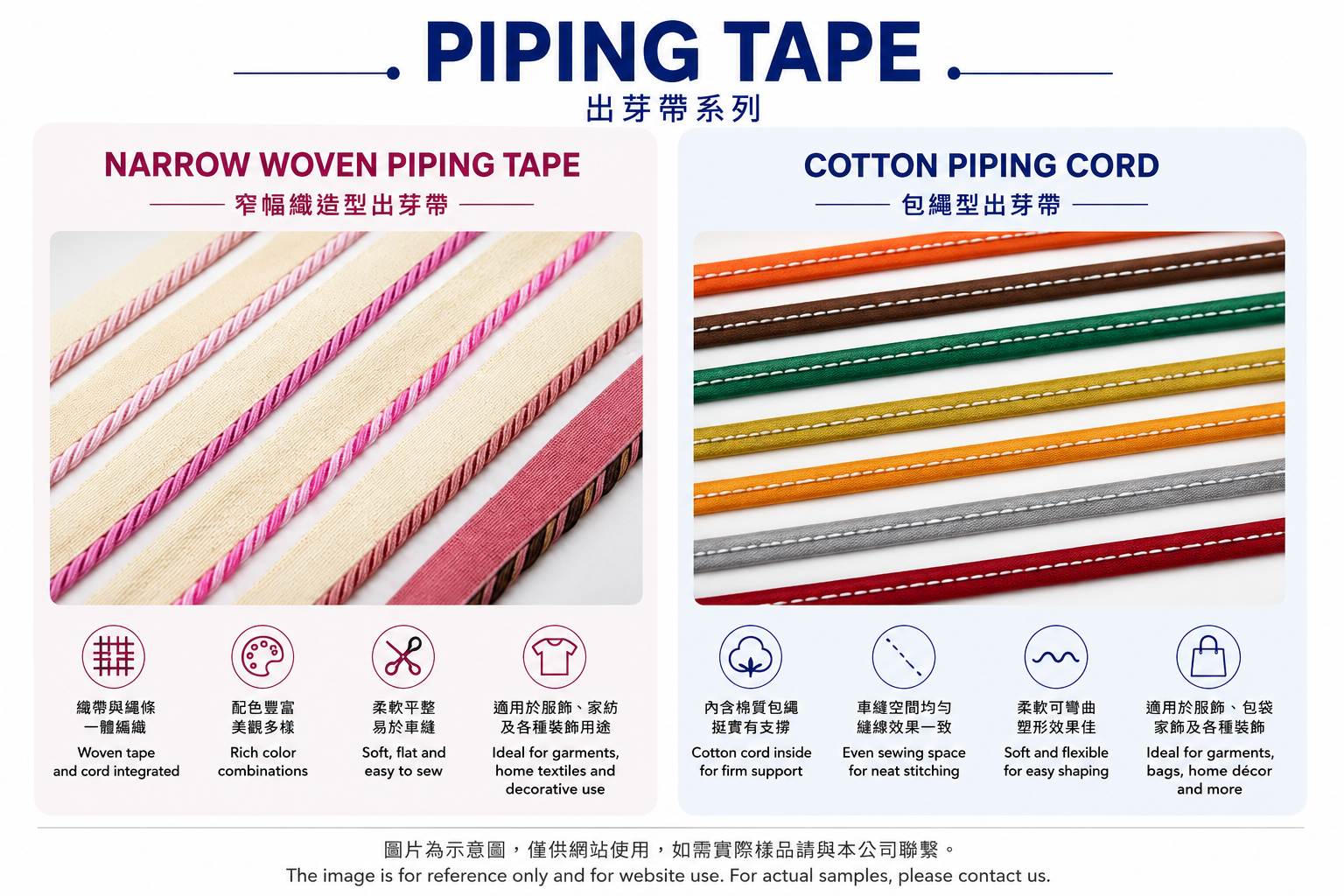
Product Name : Piping Tape
| Description |
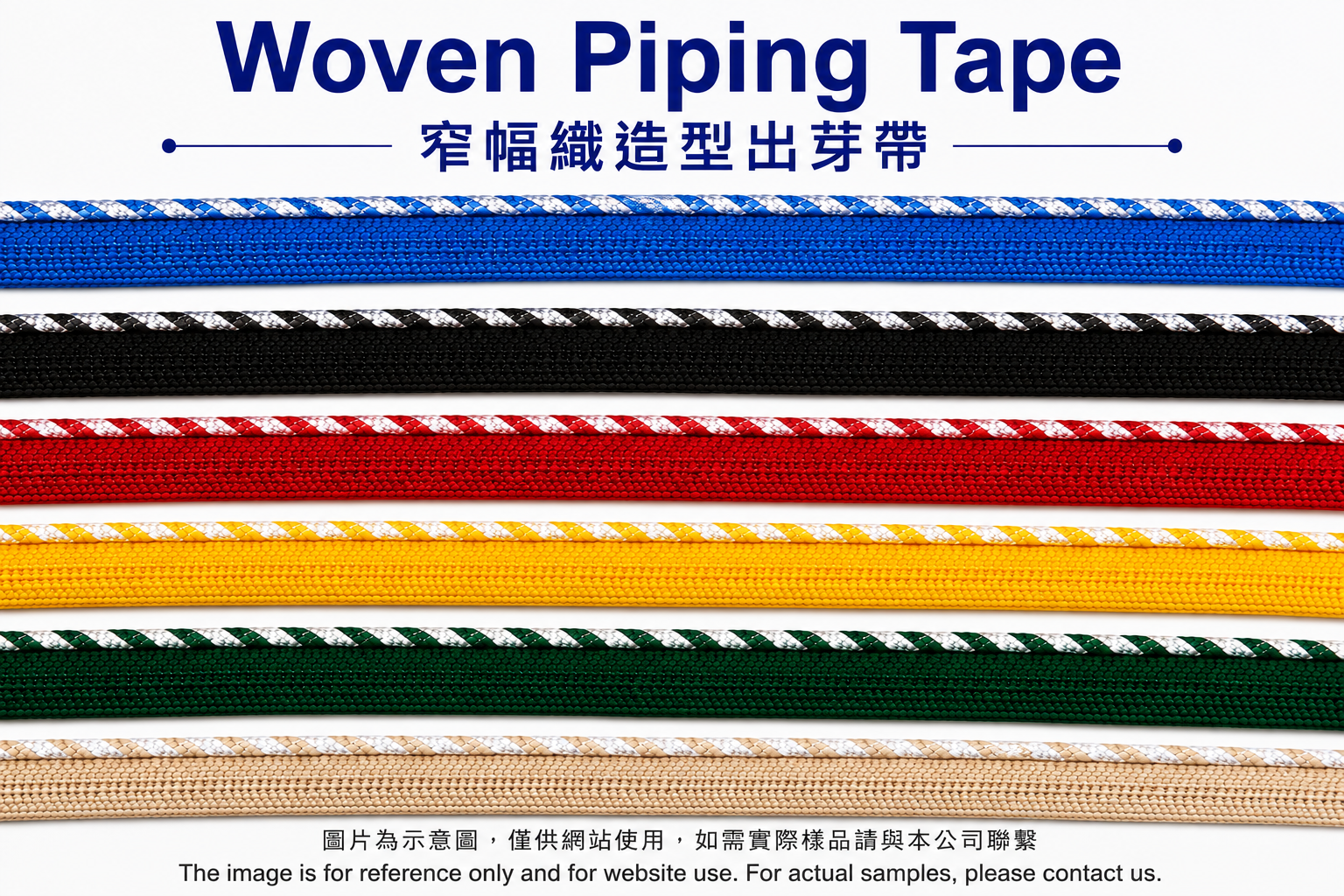
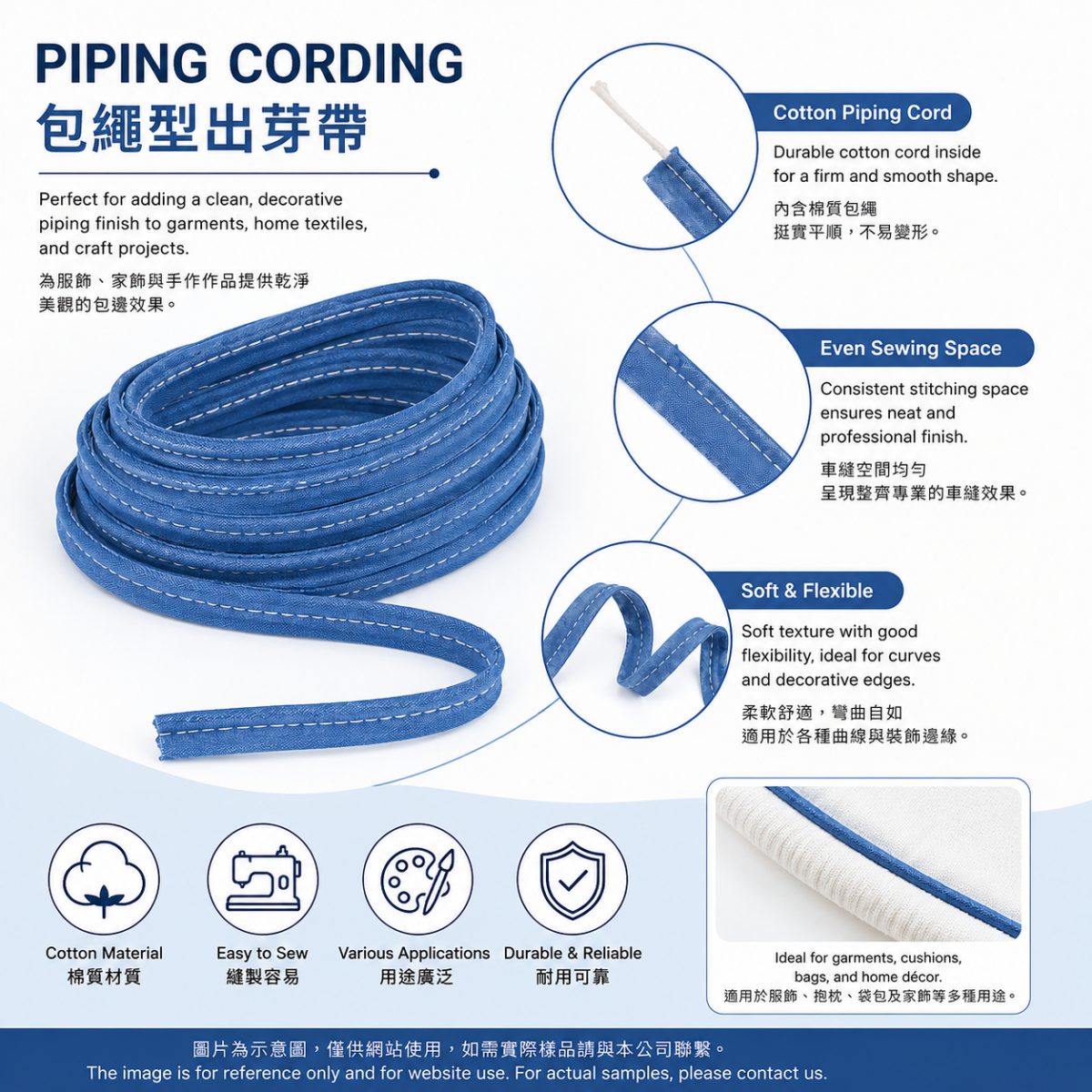
| Piping tape is a narrow textile trim used in seams, edges, and decorative details to create a defined line or raised profile on finished products. It can be used to emphasize contours, separate color sections, or add visual definition to sewn components. Depending on the construction and application, piping tape is suitable for apparel, sportswear, footwear, bags, home textiles, and other sewn products. Fu Jyi Lin offers both Woven Piping Tape and Corded Piping constructions. Woven piping tape is produced directly as a narrow textile tape and can be developed in different materials, widths, thicknesses, surface textures, and colors. Corded piping is formed by wrapping fabric or tape around a core cord to create a raised profile. Cover material, cord diameter, overall width, sewing flange, and cut direction can be adjusted according to the required appearance and sewing application. Fu Jyi Lin supports OEM and ODM development from physical samples, product photos, dimensional specifications, or target applications. We can assist with selecting the appropriate piping construction, material, dimensions, cord size, color, and sewing configuration. For projects involving specific seam structures, curved areas, or production equipment, physical sampling with the intended materials is recommended before mass production. |
 Features
 |
||
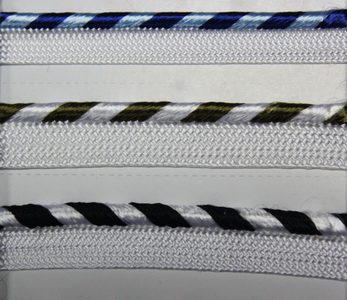
1 - Woven Piping Tape |
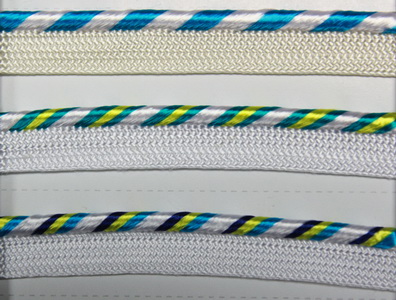
2 - Woven Piping Tape |
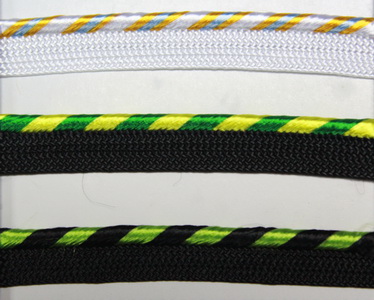
3 - Woven Piping Tape |
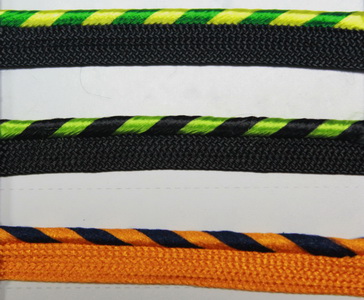
4 - Woven Piping Tape |
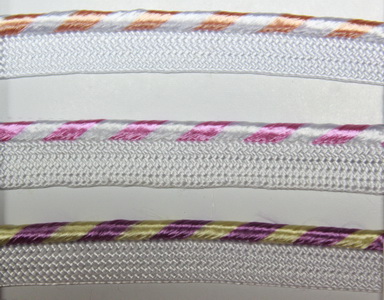
5 - Woven Piping Tape |
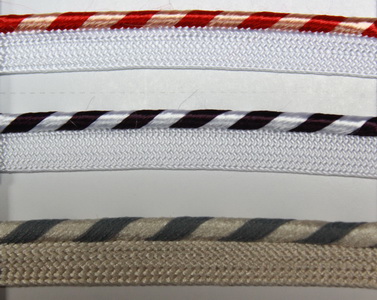
6 - Woven Piping Tape |
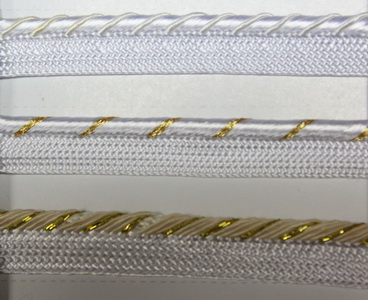
7 - Woven Piping Tape |
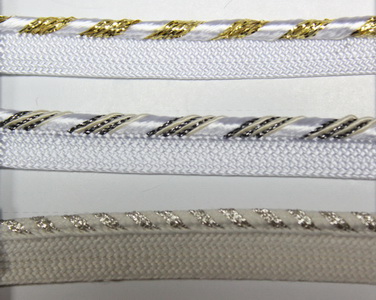
8 - Woven Piping Tape |
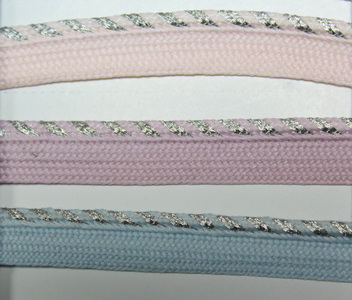
9 - Woven Piping Tape |
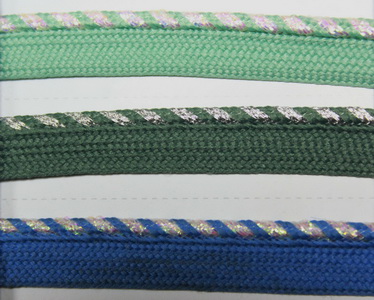
10 - Woven Piping Tape |
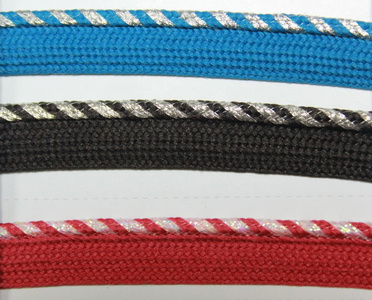
11 - Woven Piping Tape |
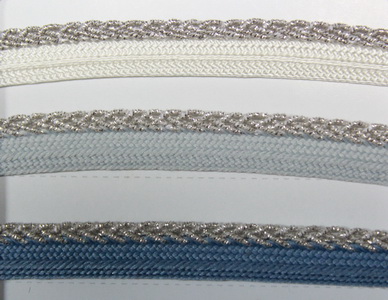
12 - Woven Piping Tape |
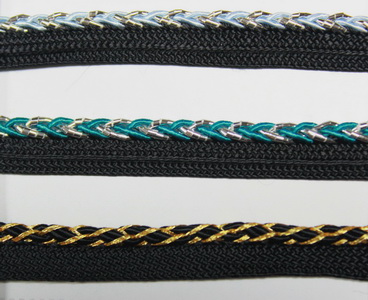
13 - Woven Piping Tape |
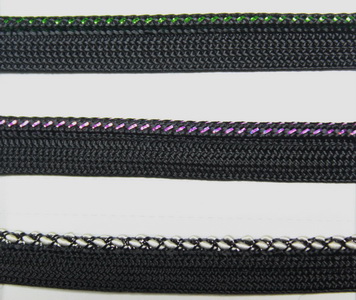
14 - Woven Piping Tape |
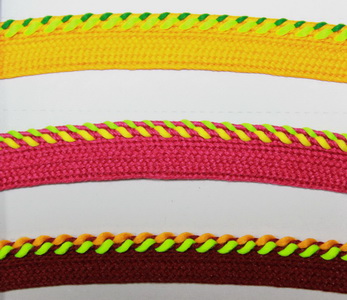
15 - Woven Piping Tape |
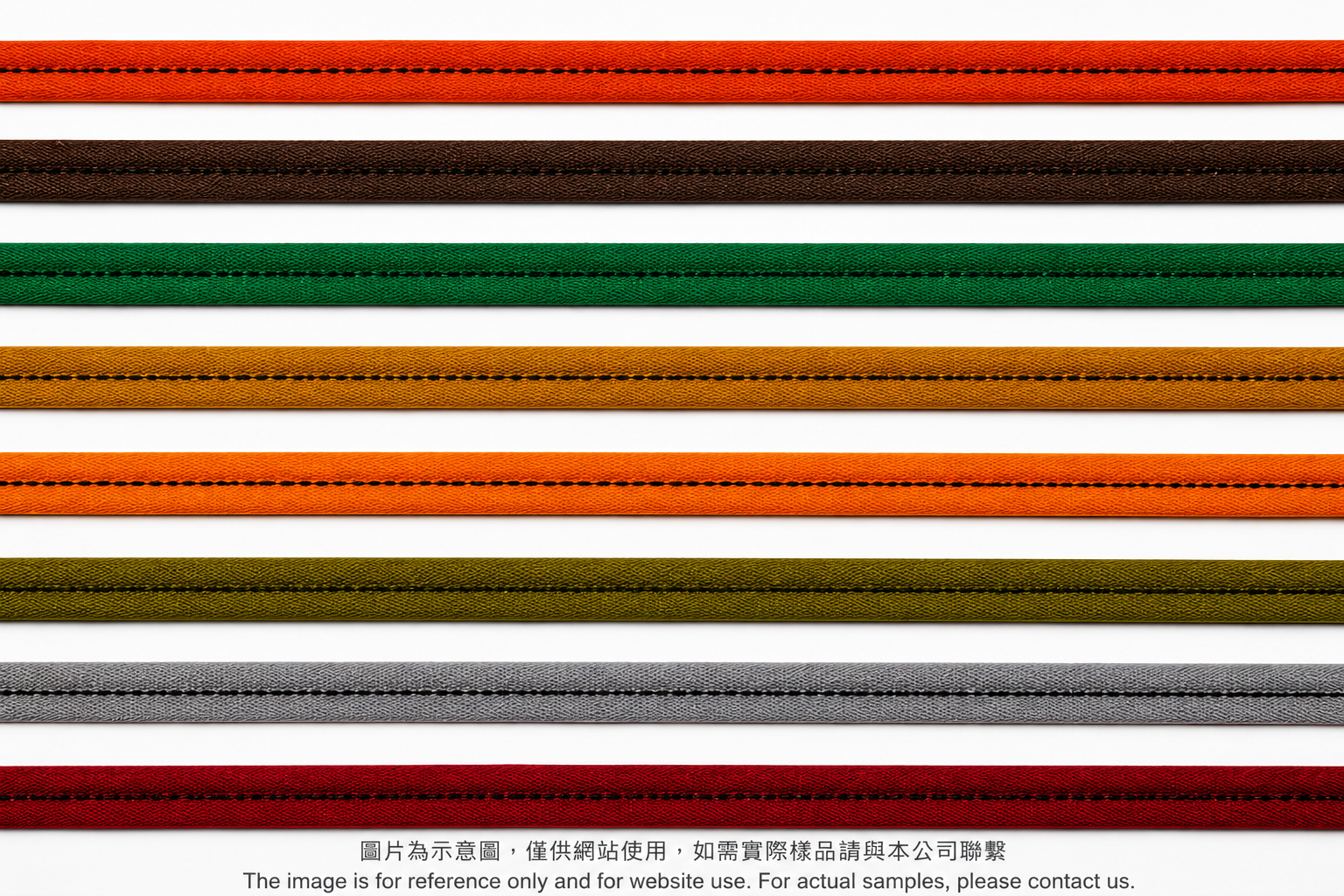
16 - Corded Piping |
|
Specification |
|
**Product Name** Piping Tape **Product Types / Construction** Available as "Woven Piping Tape" and "Corded Piping". Woven piping is produced directly as a narrow woven tape. Corded piping is formed by wrapping fabric or tape around a core cord to create a raised piping profile. When the cover material is bias cut, the product may be described as "Bias Cord Piping". **Material** >>Woven: Common materials include "Polyester, Nylon / Polyamide, Polyester-Nylon combinations, and Recycled Polyester". Metallic yarns, decorative yarns, or other suitable narrow-fabric materials may also be evaluated. >>Corded: Cover materials may include "Cotton, Polyester, Nylon / Polyamide, blended fabrics, PU / synthetic leather, reflective materials, or other suitable textiles". Core cord material is selected according to diameter, flexibility, firmness, appearance, and end use. **Common Widths / Piping Dimensions** >>Woven: Common widths are "approximately 6–12 mm, including **6, 7, 9, and 9.5 mm"". Other widths may be developed according to the required piping profile and sewing application. >>Corded: Overall width can be customized according to the required structure. For accurate specification, **Cord Diameter, Overall Width, and Sewing Flange Width** should be confirmed together. **Cord & Sewing Flange Specifications** Applies to "Corded Piping". Common cord diameters may start "at approximately 2–3 mm", with other sizes developed according to the required piping profile and finished appearance. The sewing flange provides the flat area used for stitching and should be specified according to the cover material, seam construction, stitch position, and sewing equipment. Physical samples or dimensional drawings are recommended when matching an existing piping foot or production setup. **Cut Direction** >>Woven: Not applicable because the tape is directly woven to width. >>Corded: Cover material may be "Straight Cut" or "Bias Cut". Bias-cut constructions may be evaluated for curved, rounded, or shaped seams where greater conformity is required. **Surface Appearance / Effects** Surface texture and visual effect can be adjusted through yarn selection, woven structure, cover material, cord size, and finishing. Options may include **matte, glossy, metallic, reflective, mixed-material, or other decorative effects**, subject to material and project requirements. **Colors / Custom Color Matching** Existing colors and custom colors can be developed according to material and project requirements. Custom matching may be based on a "Pantone reference, physical color swatch, or approved sample". Corded piping may also be developed from specified base fabrics or cover materials. **Basic Converting** Available processes may include **cut-to-length processing, heat cutting where suitable, ultrasonic cutting, joining, and sewing**. Corded piping may additionally require fabric slitting, Straight / Bias cutting, cord wrapping, forming, and strip joining. **Applications** >>Woven Piping Tape: Apparel, sportswear, footwear, bags, accessories, and other products requiring decorative lines or seam detailing. >>Corded Piping: Garment seams, bag edges, footwear, cushions, home textiles, and other sewn products requiring a more pronounced raised piping profile. Bias-cut versions may be evaluated for curved or rounded areas. **Standard Roll Packing** "30 m per roll" is a common standard packing format. "50 m per roll, 100 m per roll", or other specified roll lengths may also be provided according to material, product structure, cord size, and processing requirements. **Custom Packaging** Custom roll lengths, small rolls, cut-length packing, labels, barcodes, inner bags, export cartons, or other specified packaging formats may be evaluated. Special roll lengths, joint limitations, or packaging requirements may affect MOQ, cost, and lead time. **MOQ** >>Woven Piping Tape: Minimum order quantity is "5,000 yards". >>Corded Piping: Minimum order quantity is approximately "5,000–10,000 yards". Woven MOQ is mainly affected by material, width, construction, color, dyeing, and machine setup, while Corded Piping is also affected by cover-material availability, cord specification, cutting direction, and assembly requirements. **OEM / ODM Services** Fu Jyi Lin supports development from **physical samples, product photos, dimensional specifications, fabric samples, or target applications**. We can assist with selecting Woven or Corded construction, material, width, cord diameter, overall width, sewing flange, Straight / Bias Cut, surface effect, color, sampling, and packaging. **Specification Notes** Woven Piping Tape and Corded Piping use different construction and dimensional references, so product selection should not be based on overall width alone. Woven specifications should confirm tape width, structure, and required visible piping profile. Corded specifications should confirm **Cord Diameter, Overall Width, Sewing Flange Width, Cover Material, and Cut Direction**. Finished piping profile and sewing results may also vary according to material thickness, seam construction, and equipment settings. Physical sampling with the intended materials is recommended for custom dimensions, special materials, or curved applications before mass production. |
|
Asks Description |
|
Frequently Asked Questions (FAQ) 1. What information should I provide for an accurate quotation? Please provide the piping type, material, color, estimated quantity, end application, and packaging requirements. "For Woven Piping Tape", specify the tape width and target visible piping profile. "For Corded Piping", provide the cord diameter, overall width, sewing flange width, and Straight Cut or Bias Cut requirements. If full specifications are not available, a physical sample, product photo, dimensional drawing, or finished-product reference can be used for evaluation. 2. How do I choose between "Woven Piping Tape" and "Corded Piping"? "Woven Piping Tape" is directly woven as a narrow textile tape and is suitable for applications requiring a defined decorative line or seam detail. "Corded Piping" uses a fabric or tape cover around a core cord to create a more pronounced raised profile. Selection should be based on the required piping appearance, cord profile, material, straight or curved seam geometry, and sewing conditions. 3. How should "cord diameter" and "Straight Cut" or "Bias Cut" be selected for Corded Piping? Cord diameter affects the thickness, height, and visual profile of the finished piping. Common development may start around 2–3 mm, with other sizes available according to the required appearance. Straight Cut is generally suitable for straight or regular seams, while Bias Cut may be selected for curved, rounded, or shaped areas. Sewing flange width should also be confirmed together with the seam position and piping-foot setup. 4. Is sample development recommended before mass production? Yes. Sampling is especially recommended for custom cord sizes, curved applications, special cover materials, reflective or metallic effects, or products that must fit specific piping feet or sewing equipment. Testing with the intended production materials helps confirm the visible piping profile, cord fit, sewing flange, seam position, curve conformity, surface appearance, and equipment compatibility before the final production specification is approved. 5. How are MOQ, lead time, and OEM / ODM development arranged? The minimum order quantity for Woven Piping Tape is 5,000 yards, while Corded Piping is approximately 5,000–10,000 yards. Woven production timing depends mainly on material, width, construction, color, dyeing, and machine setup. Corded Piping is additionally affected by cover-material availability, cord specifications, Straight or Bias Cut, and assembly requirements. Fu Jyi Lin can support specification development, sampling, production planning, and packaging from samples, drawings, or target applications. |
|
Other |
  |
 |
Fu Jyi Lin Enterprise Co., Ltd. Copyright © 2014 |
| Address: 10071 No.17-1, SHAU ANN St., Zhongzheng Dist., Taipei City 100, Taiwan (R.O.C.)
TEL:886-2-2301-5900 , 886-2-2307-0952 FAX:886-2-2307-5424 , 886-2-2332-6930 E-Mail:info@fujyilin.com.tw |