

 | ||
|
| ||


Hook & Loop
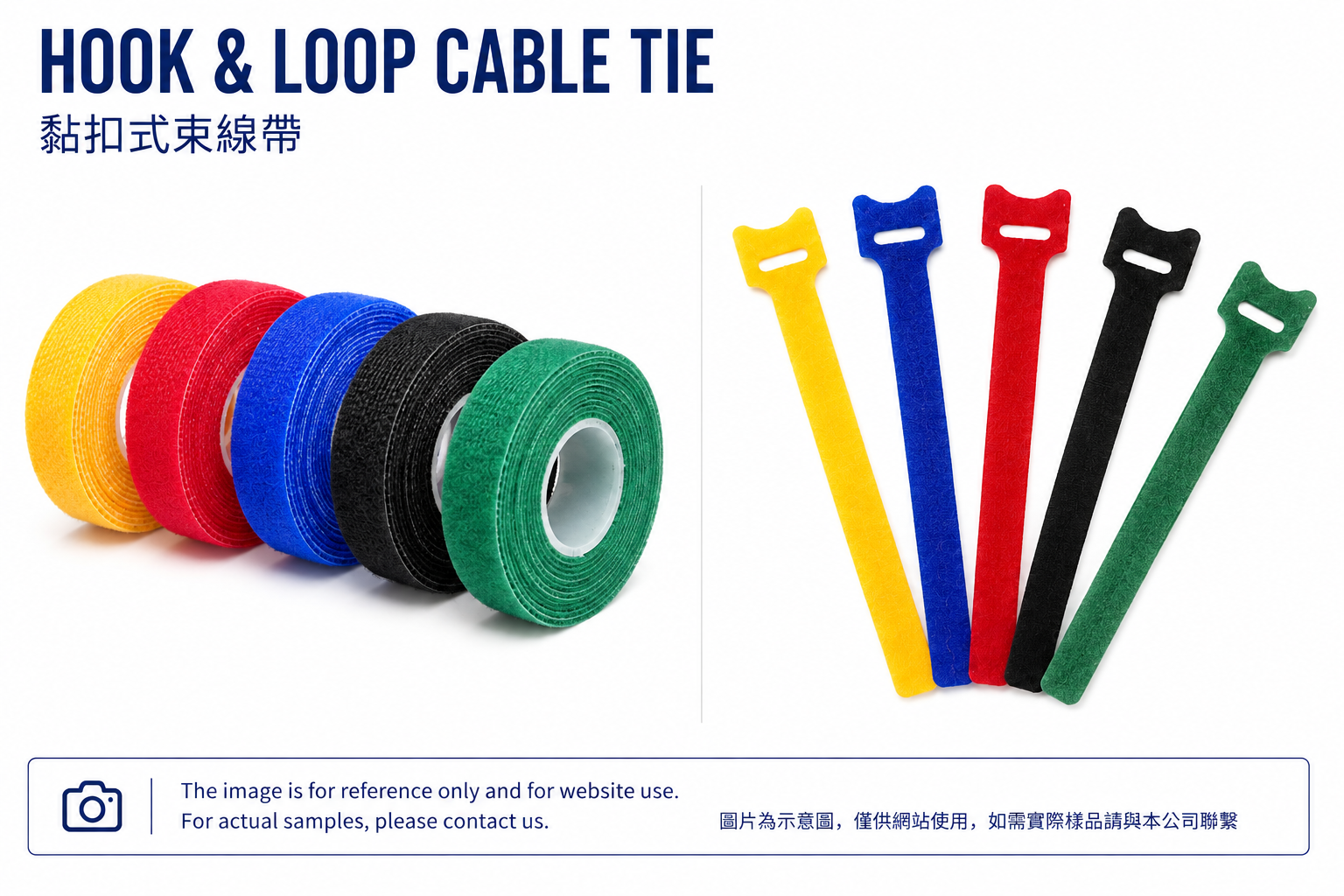
Product Name : Hook & Loop Cable Tie
| Description |
| A Hook & Loop Cable Tie combines the Hook and Loop surfaces in a back-to-back construction, allowing the same strap to wrap around cables, wires, or other items and fasten to itself. Unlike conventional Hook & Loop tape, where separate Hook and Loop tapes are typically attached at different locations, the back-to-back structure integrates both fastening surfaces into one flexible strap for repeated wrapping, adjustment, and reopening. The Hook and Loop constructions used for cable ties may differ from those used in standard fastening applications. Depending on the required flexibility and finished thickness, lower-profile Hooks, softer Hook constructions, or flexible Loop surfaces may be selected to support repeated bending and self-engagement. The objective is not maximum fastening strength alone, but a practical balance of closure performance, flexibility, strap thickness, opening feel, and repeated-use behavior. Conventional woven Hook and Loop tapes can also be converted into cable ties through back-to-back lamination, bonding, or other suitable composite processing. In these constructions, total thickness, flexibility, bonding stability, Hook / Loop compatibility, cut-edge condition, and repeated wrapping behavior should be evaluated as part of the finished design. Fu Jyi Lin can support structure selection and conversion development according to the application, tape construction, thickness, fastening requirements, and cutting or finishing needs. |
 Features
 |
||
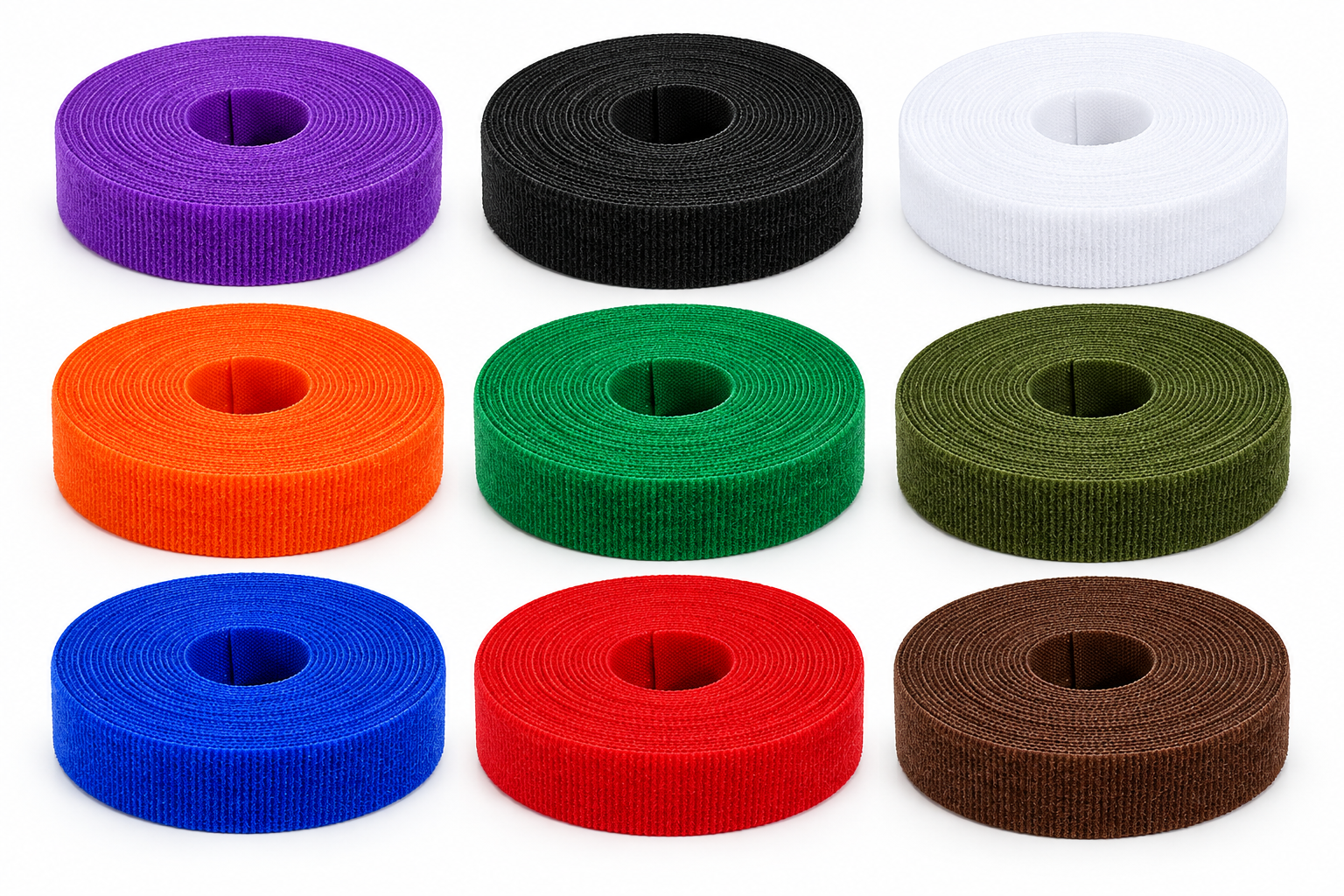
Hook & Loop Cable Tie |
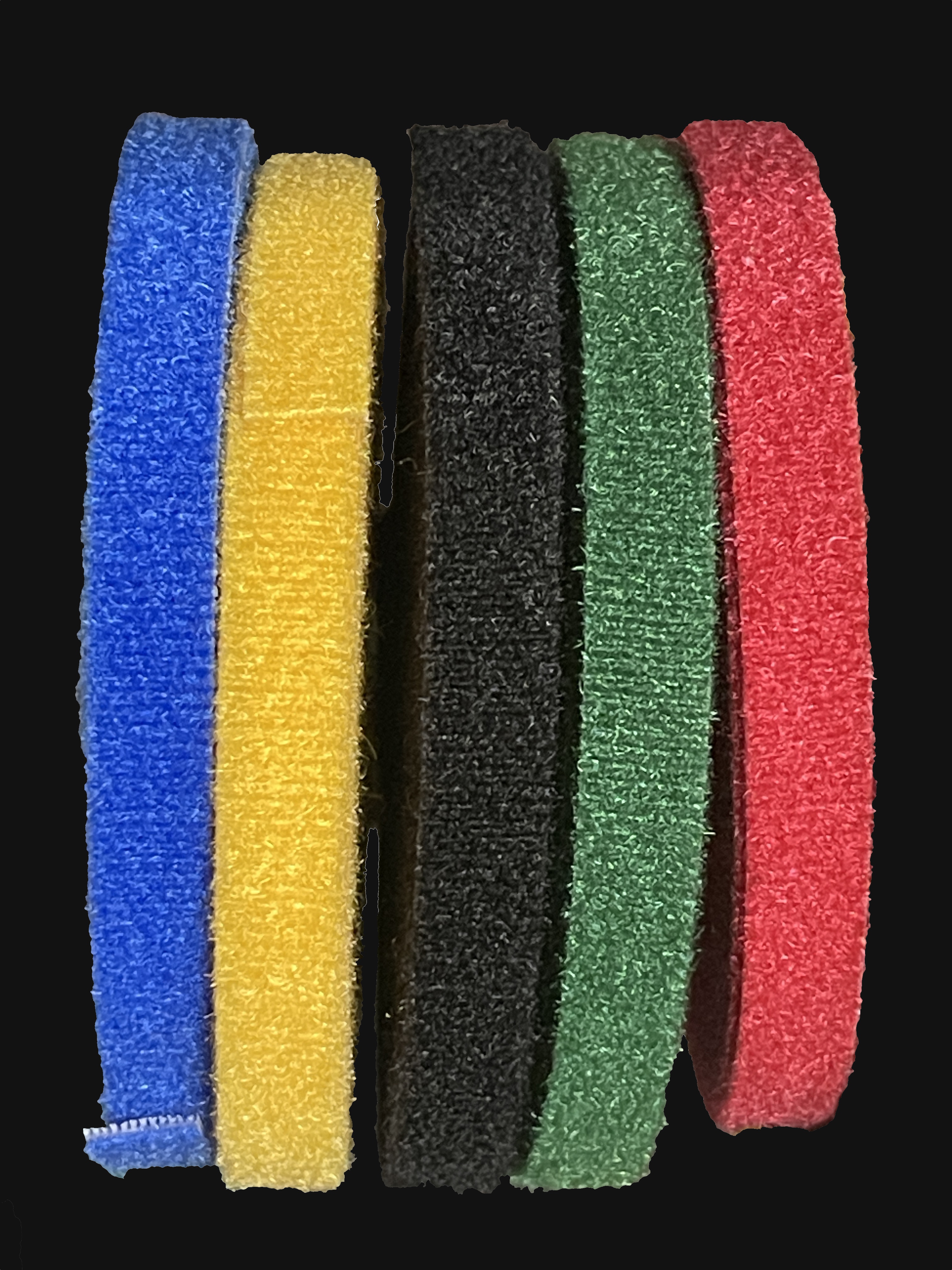
Hook & Loop Cable Tie |
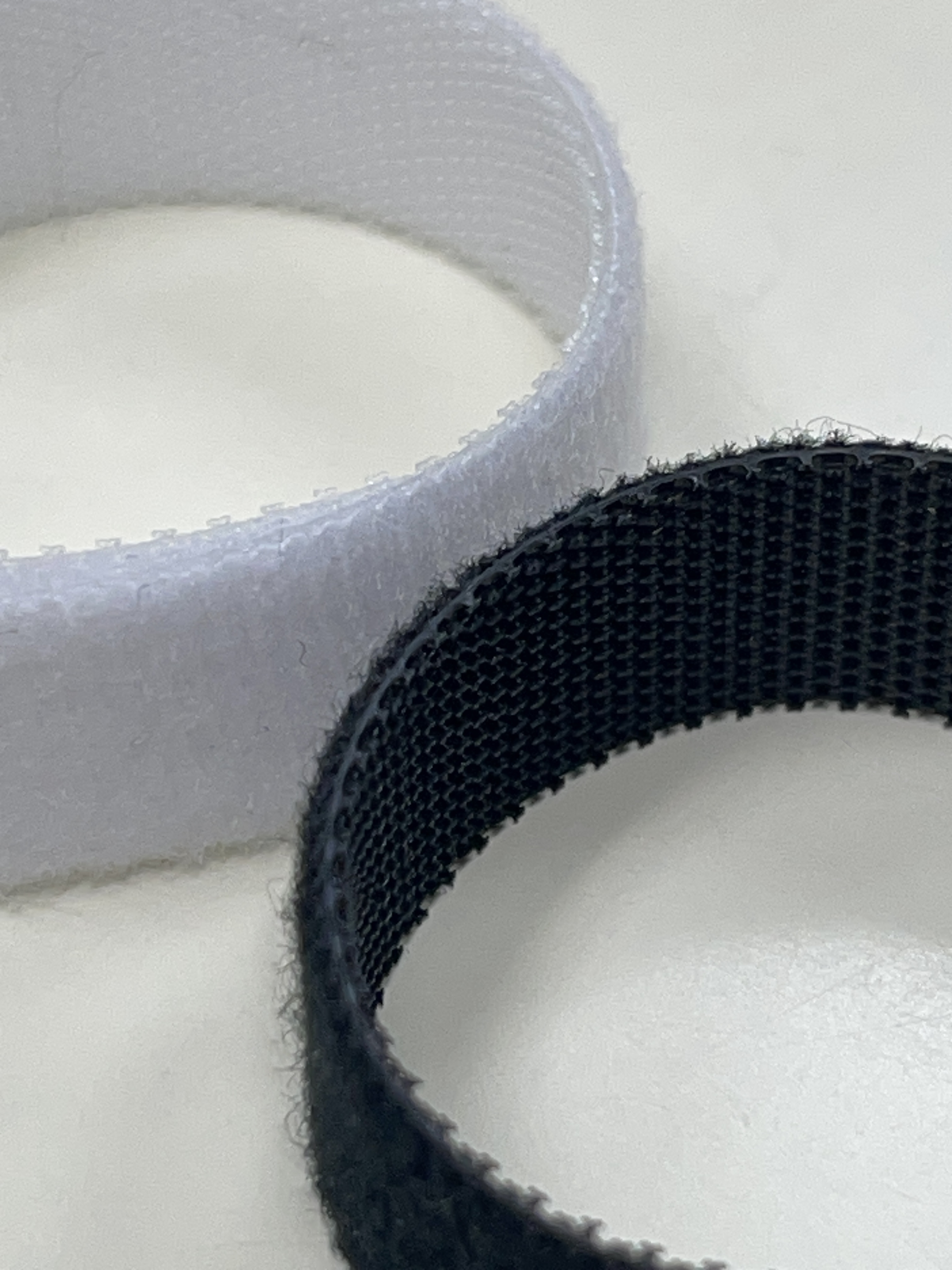
Hook & Loop Cable Tie |
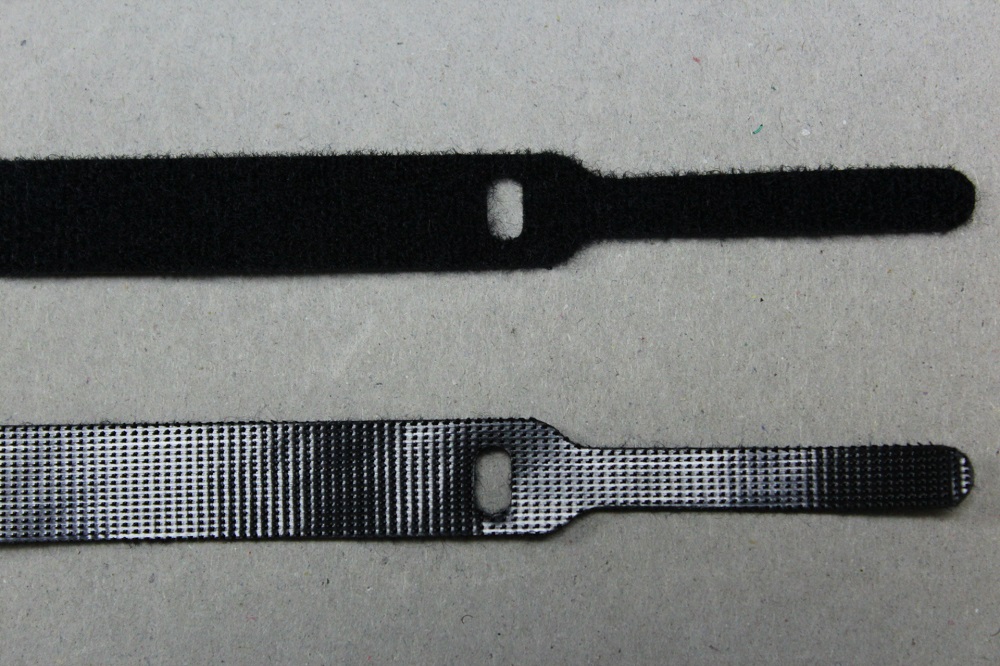
Hook & Loop Cable Tie |
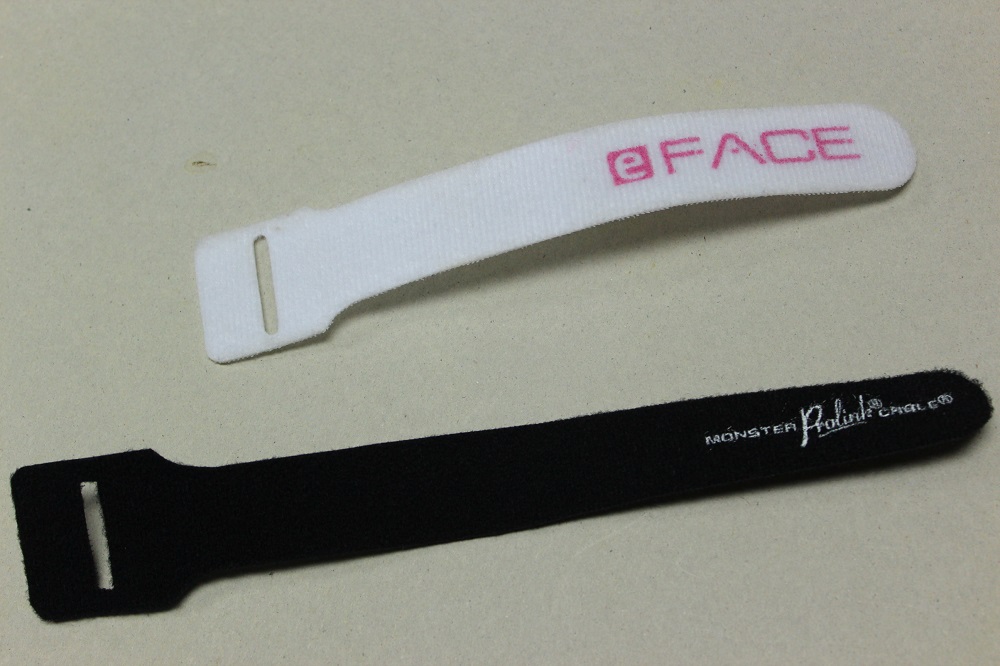
Hook & Loop Cable Tie |
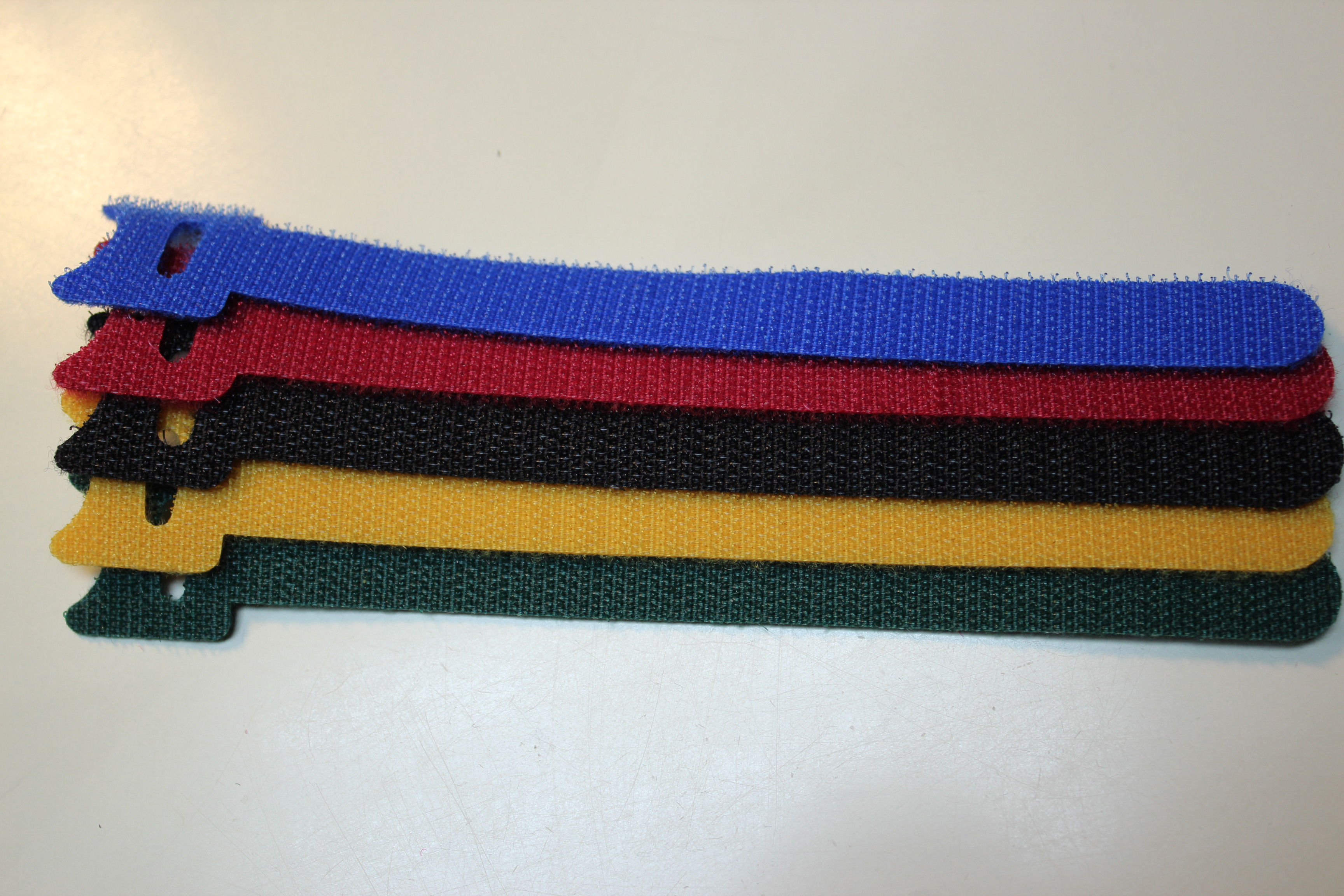
Hook & Loop Cable Tie |
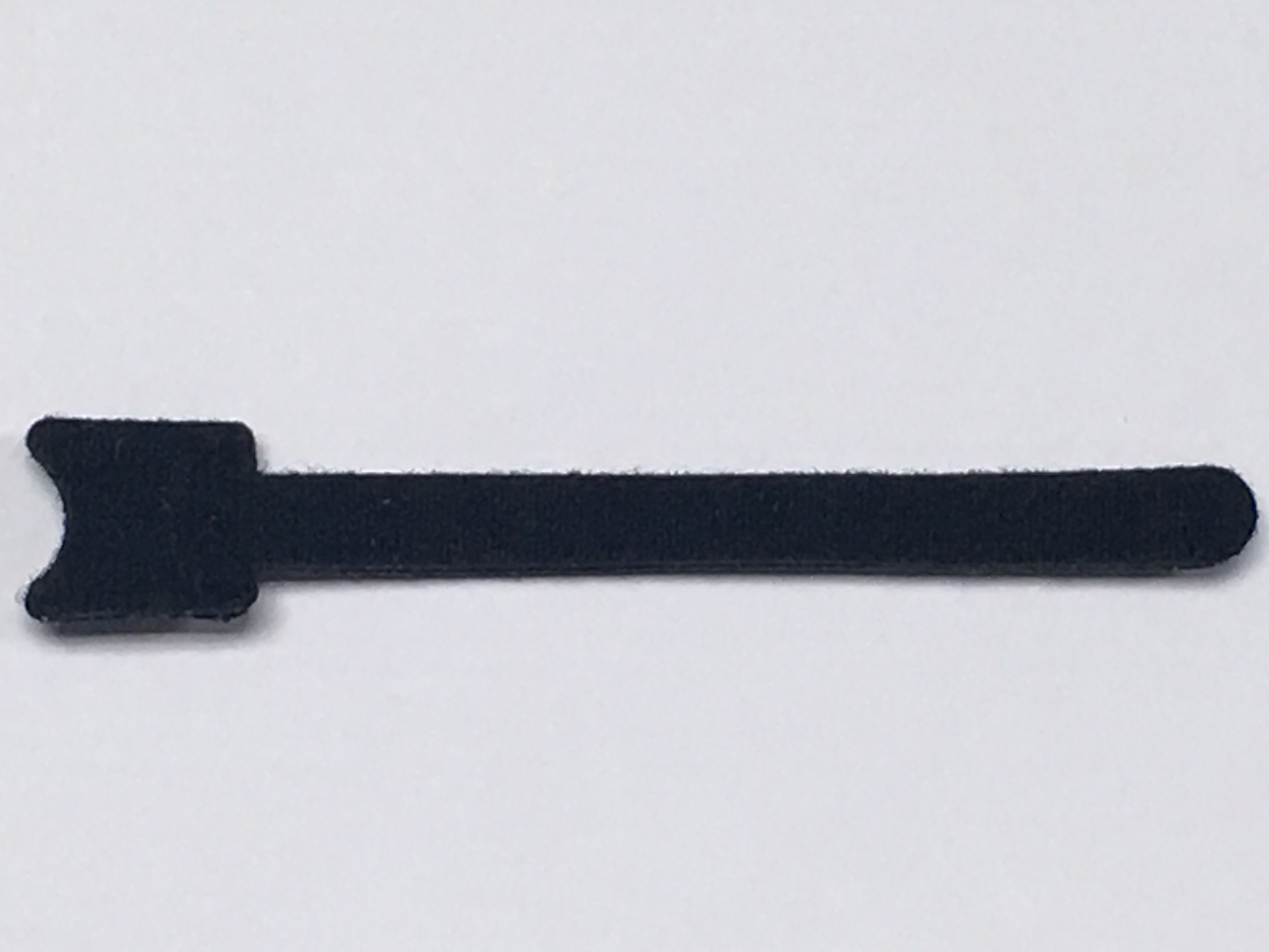
Hook & Loop Cable Tie |
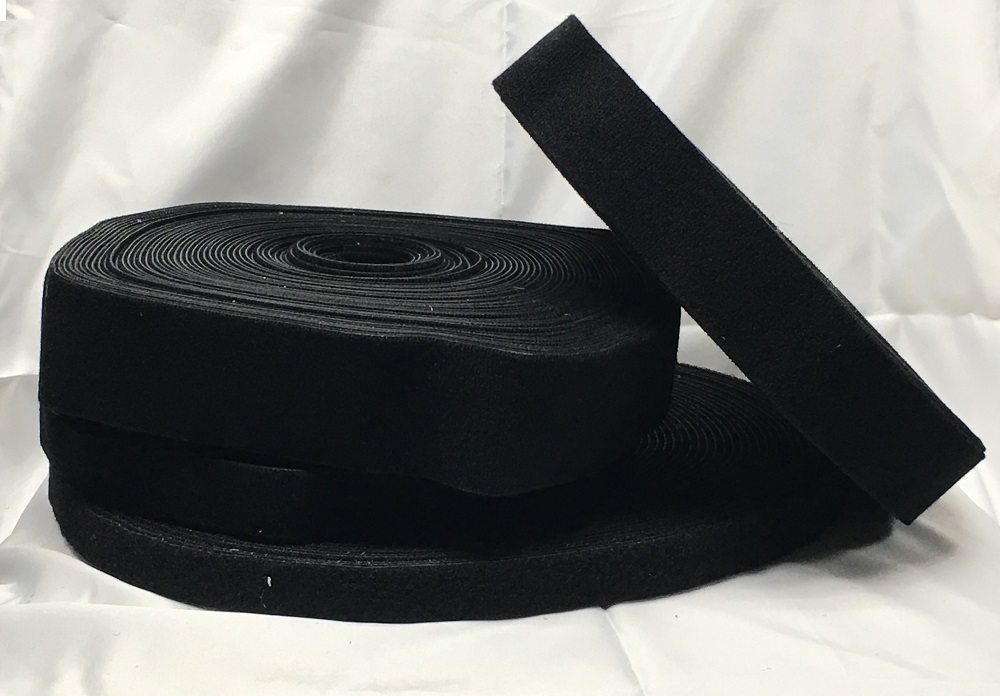
Hook & Loop Cable Tie |
|
Specification |
|
**Product Name** "Hook & Loop Cable Tie", designed with Hook and Loop surfaces that allow the strap to wrap around a cable, bundle, or other item and fasten to itself. **Construction / Back-to-Back Configuration** Hook and Loop surfaces are positioned on opposite sides of the strap to create a **back-to-back self-engaging construction**. The strap can wrap around the bundled item and engage with itself. The actual composite method depends on the Hook / Loop materials, thickness, and product construction. **Hook / Loop Surface Construction** Available constructions may include **woven Hook, low-profile Hook, molded Hook**, and other suitable Hook surfaces matched with **woven Loop, knitted Loop, velour Loop**, or other appropriate Loop structures. Final mating selection depends on thickness, flexibility, opening feel, closure performance, and repeated-use requirements. **Material / Strap Construction** Common materials include **Nylon / Polyamide, Polyester**, and composite structures such as **PE / PP Hook combined with Nylon / Polyamide or Polyester Loop**. Material selection should consider strap thickness, flexibility, Hook / Loop compatibility, bending behavior, and subsequent conversion requirements. **Base Material Width / Finished Width / Cutting Size** Back-to-back Hook & Loop can be converted from wider composite material through slitting, cutting, and subsequent finished processing. **Pre-cut base material width is available up to approximately 150 mm. Common finished widths: 12 / 16 / 20 / 25 / 30 / 38 / 50 mm.** Other widths can be evaluated according to Hook / Loop construction, material, available base width, cutting method, and custom requirements. Final availability is subject to actual material and production conditions. **Finished Length / Bundle Diameter** Finished length can be customized according to cable, wire bundle, or other bundled-item dimensions. **Bundle diameter, wrapping method, overlap length, and effective Hook / Loop engagement area** should be considered when determining the finished size. **Cutting / Die-Cutting / Finished Shape** Available conversion may include **slitting, cut-to-length processing, and custom die-cutting**. Straight strips, rounded ends, wider heads, tail profiles, holes, slots, and other custom shapes can be evaluated according to approved dimensions, samples, or die-cut drawings. **Secondary Processing / Finished Conversion** Depending on the selected material and construction, available processing may include **ultrasonic welding, heat bonding or welding, sewing, logo or text printing, hole processing, buckle attachment, plastic or metal ring integration, and other secondary conversion**. Processing suitability should be confirmed according to the finished-product requirements. **Colors / Supply Format / Packing / MOQ** Black, white, standard colors, and custom colors can be evaluated according to material and production conditions. Supply formats may include **continuous rolls, slit material, pre-cut strips, die-cut finished ties, or other specified formats**. Packing and MOQ depend on material, dimensions, color, tooling, printing, secondary processing, and order quantity. **Closure Performance / Repeated Use / Test Verification** Closure behavior depends on the **Hook profile, Loop structure, material, effective engagement area, wrapping direction, and test method**. Where defined peel, shear, cycling, or other performance requirements apply, verification should be based on the actual finished product, approved sample, and mutually agreed test conditions and acceptance criteria. **Specification Notes** A Hook & Loop Cable Tie is based on a back-to-back self-engaging Hook and Loop construction. Different Hook profiles, Loop surfaces, materials, and composite methods can affect strap thickness, flexibility, bending behavior, opening feel, and repeated-use performance. Product selection should therefore consider the complete construction rather than closure strength alone. Back-to-back material can be further converted through slitting, cut-to-length processing, die-cutting, and secondary finishing. Straight strips can be produced to specified widths and lengths, while rounded heads, wider heads, holes, slots, and other custom profiles may require dedicated die-cut tooling. Pre-cut base material width of up to approximately 150 mm is used as a common manufacturing reference; actual availability should be confirmed according to the Hook / Loop construction, material, composite method, and production conditions. Mass production should be based on the approved sample, confirmed material, Hook / Loop combination, base material width, finished width and length, die-cut drawing, hole or slot position, color, secondary processing, closure requirements, packing specifications, and other mutually agreed production conditions. Fu Jyi Lin reserves the right to adjust product specifications according to product improvements, process optimization, or customer requirements without prior notice. |
|
Asks Description |
|
Frequently Asked Questions 1. How is a back-to-back Hook & Loop Cable Tie different from conventional Hook & Loop tape? Conventional Hook & Loop generally uses separate Hook and Loop components attached at different locations. A Hook & Loop Cable Tie places the Hook and Loop surfaces on opposite sides of the same strap, creating a back-to-back self-engaging construction. This allows one strap to wrap around a cable or bundle and fasten to itself for repeated opening, adjustment, and reuse. 2. Can Hook & Loop Cable Ties be customized in width and length? Yes. Back-to-back Hook & Loop material can be slit, cut, and converted from wider base material into different finished widths and lengths. Size selection should consider not only the overall dimensions but also the effective Hook / Loop overlap and engagement area. Very short or narrow designs may reduce usable closure area, so dimensions should be evaluated according to the actual application. 3. When is custom die-cutting required instead of straight cutting? Straight cable ties can often be produced through slitting and cut-to-length processing. Rounded heads, wider heads, narrow necks, holes, slots, shaped tails, or other custom profiles generally require custom die-cutting. Die-cut tooling supports repeatable shape control in production, but dimensions or drawings should be approved in advance, and major design changes may require new or revised tooling. 4. What are the main advantages and limitations of Hook & Loop Cable Ties? Key advantages include reusability, adjustability, flexible sizing, and compatibility with cutting, die-cutting, printing, welding, sewing, or hardware integration. Limitations include dependence on Hook / Loop construction and engagement area, gradual performance changes after repeated cycling, and possible snagging on some loose or raised-fiber textiles. Unless specifically designed and tested, the product should not be treated as a load-bearing or safety-rated fastener. 5. What information should be confirmed before developing a custom Hook & Loop Cable Tie? The key information includes the application, bundle dimensions, finished width and length, Hook / Loop construction, material, head shape, holes or slots, printing, secondary processing, packing, and any defined performance requirements. For custom shapes or complex conversion, samples, dimensional drawings, or product photos can help improve accuracy when evaluating cutting, tooling, and secondary processing. |
 |
Fu Jyi Lin Enterprise Co., Ltd. Copyright © 2014 |
| Address: 10071 No.17-1, SHAU ANN St., Zhongzheng Dist., Taipei City 100, Taiwan (R.O.C.)
TEL:886-2-2301-5900 , 886-2-2307-0952 FAX:886-2-2307-5424 , 886-2-2332-6930 E-Mail:info@fujyilin.com.tw |