

 | ||
|
| ||


Webbing & Tape
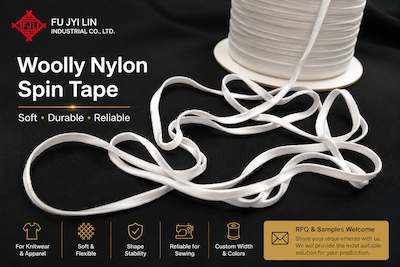
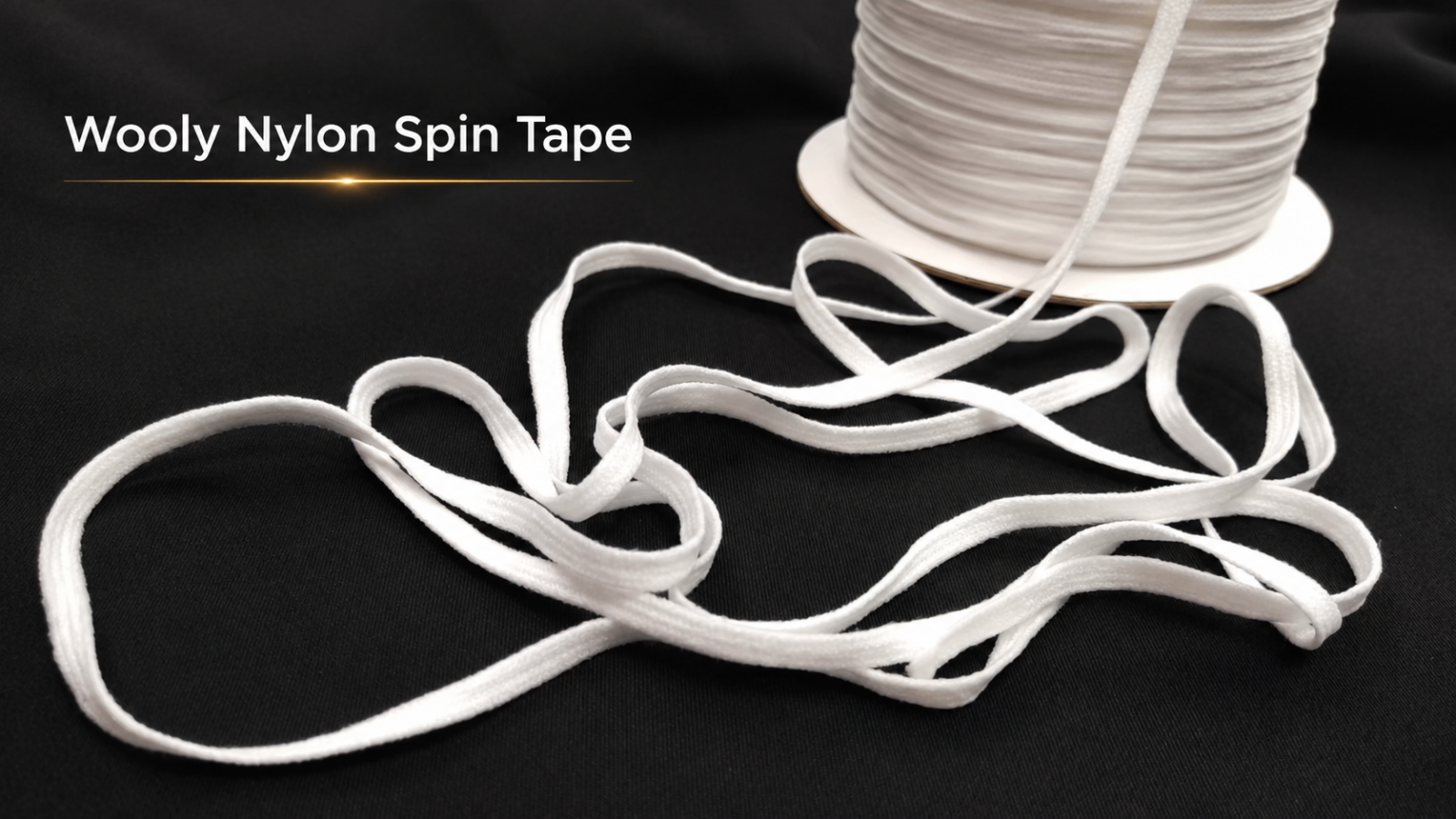
Product Name : Woolly Nylon Spin Tape
| Description |
| Woolly Nylon Spin Tape is a narrow reinforcement tape made from textured woolly nylon yarn for knitwear and stretch-garment sewing applications. Its soft, flexible construction can help stabilize seams and control excessive elongation in areas that are prone to stretching or distortion. Typical sewing positions include shoulder seams, necklines, armholes, and other garment areas where additional seam stabilization is required. Unlike conventional elastic bands, Woolly Nylon Spin Tape is not designed to provide high elastic extension. Instead, it combines limited flexibility with seam-supporting characteristics, helping knitted or stretch fabrics maintain a more controlled structure during sewing and use. It is commonly applied in sweaters, cardigans, T-shirts, polo shirts, babywear, sportswear, and other knitted apparel, with the final specification selected according to fabric stretch, seam construction, and sewing requirements. Fu Jyi Lin supports OEM and ODM development with customized widths, colors, roll lengths, and packaging. Development can begin from a physical sample, product photo, dimensional specification, fabric reference, or target application. For projects requiring specific stretch-control behavior or sewing compatibility, sampling with the intended fabric and seam construction is recommended before mass production. |
 Specification
 |
|
**Product Name** Woolly Nylon Spin Tape **Material** Textured Nylon Yarn (Woolly Nylon). The textured yarn construction provides a soft and flexible character suitable for sewing applications where controlled flexibility and seam support are required. **Common Widths** Common widths include 6 mm and 8 mm. Other widths can be evaluated according to the fabric, sewing position, tape structure, and reinforcement requirements. Special dimensions should be confirmed by sample or target specification before production. **Hand Feel** Generally soft and flexible. Final hand feel may vary according to yarn specification, tape density, width, and production conditions. Sample confirmation is recommended when the tape must match lightweight, soft, or stretch fabrics. **Structural Stretch / Stretch Control** Provides limited structural stretch while helping control excessive elongation in knitted, stretch, or other fabrics prone to seam distortion. It is not designed to provide the high elastic extension of an elastic band. Actual stretch and recovery depend on yarn characteristics, tape width, fabric stretch, seam construction, and sewing conditions. **Colors / Custom Color Matching** Common colors include White and Black. Custom colors can be evaluated according to Pantone references, physical color swatches, or approved samples. Reasonable color variation may occur between yarn lots and production batches. **Application Range** Suitable for knitted fabrics, stretch fabrics, and other textile materials requiring elongation control, seam reinforcement, or dimensional stabilization. Typical applications include knitwear, underwear, swimwear, sportswear, babywear, functional apparel, and other sewn textile products. **Typical Sewing Positions** Common sewing positions include shoulder seams, necklines, armholes, cuffs, waist / waistband seams, side seams, and other areas that may be prone to excessive stretching or seam distortion. Final use should be evaluated according to fabric stretch, seam direction, and garment construction. **Common Roll Packing** Normally supplied in roll form. Roll length is confirmed according to product specification, tape width, production requirements, and order conditions. **Custom Packaging** Specified roll lengths, individual packing, labels, inner bags, export cartons, and other packaging requirements can be evaluated according to the project. **MOQ** MOQ depends on width, color, yarn specification, special dimensions, packaging requirements, and order quantity. Existing specifications and newly developed products may have different minimum production requirements. **OEM / ODM Services** Custom widths, colors, specified roll lengths, cut-to-length requirements, packaging, and other project-specific specifications can be evaluated. Development can begin from a physical tape sample, fabric sample, sewn sample, product photo, dimensional reference, sewing position, or target stretch-control requirement. ###Specification Notes The specifications shown on this page represent common product configurations and development references for Woolly Nylon Spin Tape. Final width, hand feel, color, stretch behavior, recovery, roll length, and other characteristics should be confirmed according to the intended fabric, seam construction, sewing conditions, approved sample, and project requirements. Woolly Nylon Spin Tape is intended to help control excessive fabric or seam elongation rather than provide elastic-band-type extension. Where specific elongation, recovery, dimensional tolerance, or other performance criteria are required, the test method, acceptance criteria, and approved sample should be established before mass production. Reasonable variation may occur due to raw materials, yarn lots, tape density, and manufacturing conditions. Final production specifications should therefore be based on mutually confirmed technical requirements and approved samples. |
|
Asks Description |
|
Frequently Asked Questions (FAQ) 1. What information should I provide for an accurate quotation? For a more accurate quotation, please provide the fabric type, fabric stretch characteristics, intended sewing position, required tape width, color, estimated order quantity, and roll-length or packaging requirements. If available, a physical tape sample, fabric sample, sewn garment sample, technical drawing, product photo, or existing specification is also helpful. For products still under development, describing the seam-stretch or elongation issue can help us evaluate a suitable specification. 2. How should Woolly Nylon Spin Tape be selected for different fabrics and sewing positions? Selection should consider the fabric stretch direction, degree of elongation, fabric weight and hand feel, sewing position, and the amount of movement that must remain in the finished garment. Woolly Nylon Spin Tape can be used around shoulder seams, necklines, armholes, cuffs, waist or waistband seams, side seams, and other areas prone to excessive stretching. The appropriate width and stretch-control behavior should be confirmed according to the actual fabric and seam construction. 3. Is sample development recommended before mass production? Yes, especially when working with a new fabric, special sewing position, or defined stretch-control requirement. Testing the tape with the actual production fabric and intended seam construction helps confirm tape width, hand feel, seam appearance, stretch control, and sewing compatibility. The sample should also verify that the reinforced area retains the movement required by the garment. Where specific elongation or recovery criteria apply, test methods and acceptance requirements should be established before production. 4. How are MOQ and lead time determined? MOQ and lead time depend on factors such as tape width, color, yarn specification, existing or newly developed specifications, special dimensions, packaging requirements, sample development, and order quantity. Standard colors and existing specifications may follow different production conditions from newly developed or custom products. Final MOQ and lead time are therefore confirmed after the required specification, sample requirements, and packaging conditions have been reviewed. 5. How can Fu Jyi Lin support Woolly Nylon Spin Tape development? Fu Jyi Lin can support OEM and ODM development from a physical tape sample, fabric sample, sewn sample, product photo, dimensional reference, sewing position, or target stretch-control requirement. Development may include width and color evaluation, hand-feel matching, sample preparation, sewing verification, specified roll lengths, cut-to-length requirements, and custom packaging. For applications with defined performance requirements, the production specification can be established after sample evaluation and technical confirmation. |
|
Other |
|
|
 |
Fu Jyi Lin Enterprise Co., Ltd. Copyright © 2014 |
| Address: 10071 No.17-1, SHAU ANN St., Zhongzheng Dist., Taipei City 100, Taiwan (R.O.C.)
TEL:886-2-2301-5900 , 886-2-2307-0952 FAX:886-2-2307-5424 , 886-2-2332-6930 E-Mail:info@fujyilin.com.tw |