

 | ||
|
| ||


Webbing & Tape
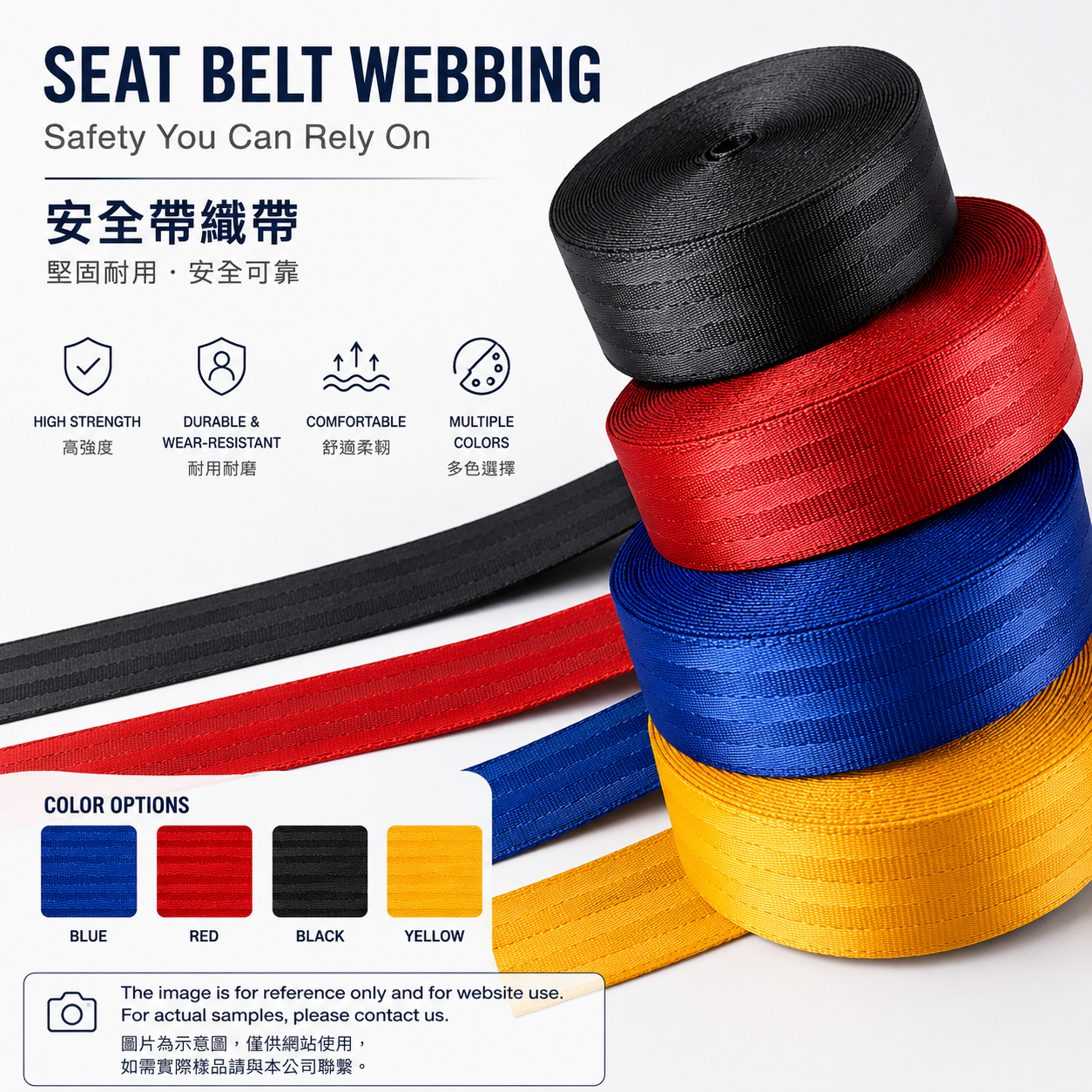
Product Name : Seat Belt Webbing
| Description |
| Seat Belt Webbing is a narrow woven textile component used in automotive seat belt assemblies and other occupant restraint applications. It functions as the primary textile load-bearing element within the restraint system and must work together with the retractor, buckle, guide hardware, and anchorage components. The webbing is therefore developed to balance flexibility, structural stability, controlled elongation, and compatibility with the complete seat belt system. Seat Belt Webbing is primarily manufactured from Polyester and can be developed according to project requirements for width, weave density, surface texture, color, and hand feel. Compared with general-purpose webbing, seat belt webbing requires closer control of tensile performance, elongation behavior, abrasion characteristics, surface friction, flexibility, and retractor compatibility. Where specific tensile, elongation, abrasion, or other performance requirements apply, the final specification should be confirmed through defined test methods and acceptance criteria. Fu Jyi Lin supports OEM and ODM development based on physical samples, technical specifications, drawings, width, color, weave references, target tensile or elongation requirements, and end-use applications. For automotive occupant restraint or other safety-related applications, sample verification and performance testing should be completed according to the customer’s specified standards and acceptance requirements before mass production. |
 Features
 |
||
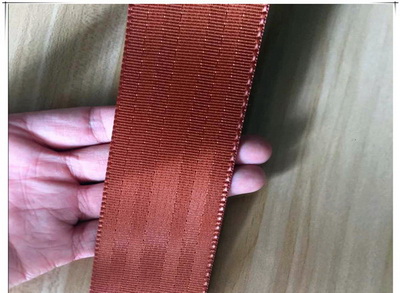
1 - Safety Belt |
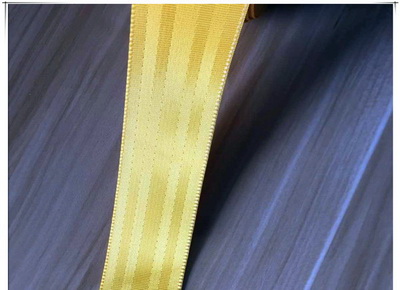
2 - Safety Belt |
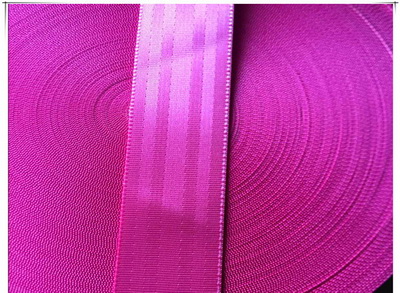
3 - Seat Belt |
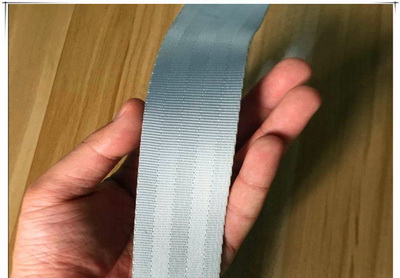
4 - Seat Belt |
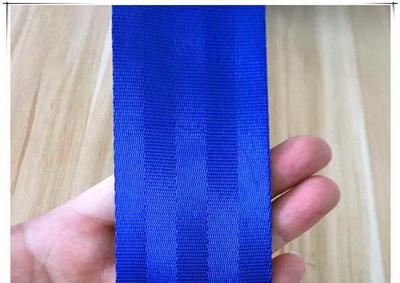
5 - Seat Belt |
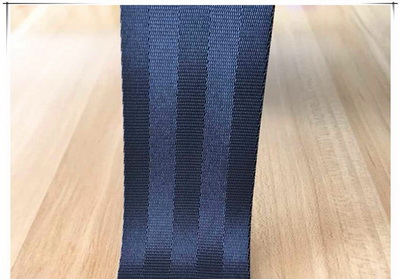
6 - Seat Belt Webbing |
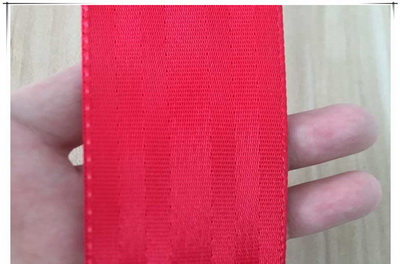
7 - Seat Belt Webbing |
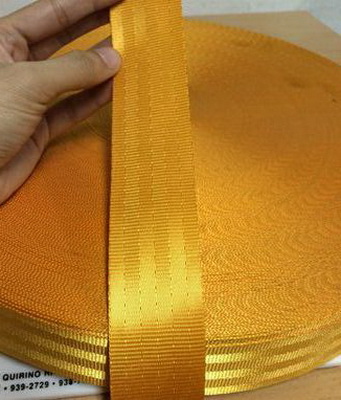
8 - Seat Belt Webbing |
|
Specification |
|
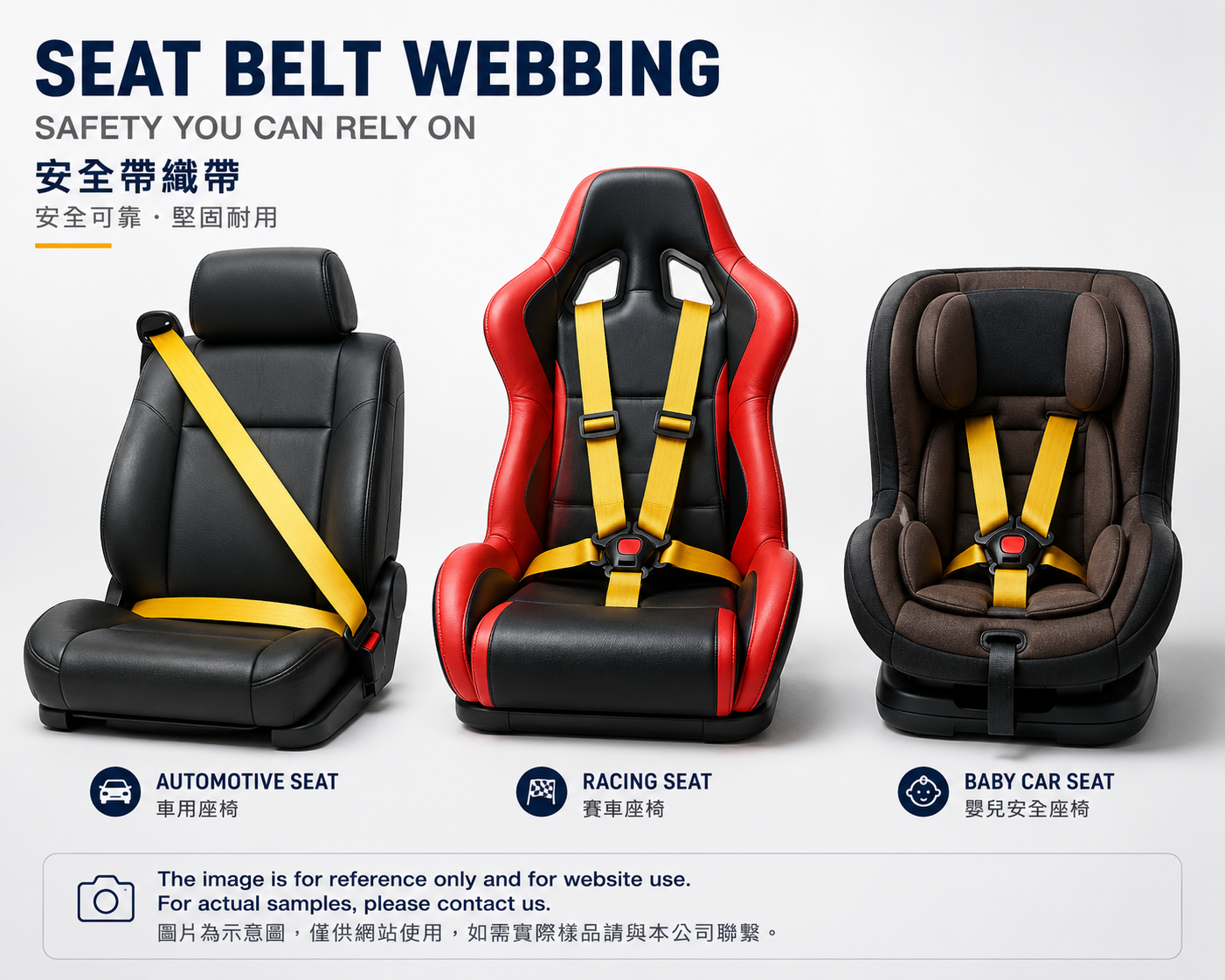
**Product Name** "Seat Belt Webbing", developed for automotive seat belt systems, child restraint products, stroller harnesses, and other restraint or securement applications. Final specifications should be selected according to the actual end use and system requirements. **Material** Primarily "Polyester". Yarn specification, linear density, and strength grade can be selected according to the intended application and target performance. Where a project specifies "High-Tenacity Polyester Yarn" or another defined yarn grade, the requirement should be confirmed against the customer's technical specification. **Common Widths / Application Sizes** "Automotive occupant seat belt webbing" is commonly developed in the "46–48 mm class", with 48 mm frequently used as a nominal width; FMVSS 209 specifies a minimum width of 46 mm for applicable occupant-contacting webbing. Narrower widths such as approximately *"25 mm or 38 mm" may be used in child restraint, stroller, or safety-harness applications depending on the restraint position, hardware, and applicable product requirements. Widths for different applications should not be considered interchangeable. **Thickness / Flexibility** Automotive seat belt webbing is commonly seen around "1.15–1.25 mm" in thickness, although this is not a universal requirement for every restraint application. Final thickness and flexibility depend on yarn specification, weave density, surface structure, and finishing conditions, and can influence routing, folding, guide interaction, and retractor compatibility. **Weave / Surface Structure** Weave density and surface structure can be developed according to the required tensile behavior, elongation, flexibility, surface friction, and system compatibility. Twill and other engineered woven constructions may be used depending on the application; no single weave structure should be treated as universal for all seat belt webbing. **Functional Finishing / Surface Treatment** Available project-specific finishing options may include "Heat Setting / Thermofixation, Calendering, Anti-friction / Surface Finishing, Flame-Retardant Treatment, and UV-Stabilized / UV-Resistant Treatment". Heat setting can be used to control dimensional and elongation behavior, while calendering and surface finishing can affect thickness, smoothness, friction, and handling characteristics. Because finishing may alter tensile, elongation, abrasion, or flexibility performance, safety-related products should be re-evaluated after special processing. Seat-belt finishing equipment specifically uses controlled webbing tension during heat setting to maintain specified elongation characteristics. **Tensile Performance** Product development can be based on the customer's "target breaking strength, load conditions, end-use application, and specified test method". Different automotive, child-restraint, stroller, and harness applications may have different load requirements, so one tensile value should not be applied to all Seat Belt Webbing. Where compliance or defined tensile performance is required, final verification should be arranged by the customer through a qualified third-party laboratory. **Elongation Performance** Seat Belt Webbing should be evaluated in terms of "Controlled Elongation", rather than simply minimizing stretch. Actual elongation depends on yarn, weave construction, density, heat-setting conditions, and other processing variables. Where elongation at a specified load is required, the applicable load, test method, and acceptance criteria should be defined before development and confirmed through testing. FMVSS 209, for example, treats breaking strength and elongation as separate performance requirements. **Abrasion / Durability / Environmental Performance** Requirements may include "abrasion resistance, light exposure, colorfastness, flame-retardant performance, UV resistance, and other environmental conditions" according to the project. Test methods and acceptance criteria vary by end use and market; these properties should therefore be specified and verified on a project basis rather than represented by one universal performance value. **Colors / Custom Color Matching** Black and other custom colors can be developed according to a physical color reference, approved sample, or specified color requirement. For safety-related projects, changes in color or finishing conditions should be included in the applicable sample and performance-verification process where required. **Application Range** Suitable specifications can be developed for "Automotive Seat Belt, Child Restraint / Child Safety Seat, Baby Stroller / Safety Harness", and other confirmed restraint or securement applications. Products used for different applications may require different widths, tensile performance, elongation, hardware compatibility, and testing criteria. **Roll Packing / Packaging** Normally supplied in "roll form". Automotive seat belt webbing is commonly available in roll formats up to approximately "100 m", while final roll length should be confirmed according to width, construction, order quantity, and handling requirements. Custom roll lengths, labels, inner packing, export cartons, and other packaging formats can also be arranged. **Third-Party Testing / Customer Validation** Fu Jyi Lin can develop samples and production specifications according to the customer's target requirements. Where a project involves "tensile, elongation, abrasion, flame-retardant, UV, regulatory, certification, or other safety-performance requirements", the customer should determine the applicable standard for the intended market and arrange testing through a qualified third-party laboratory. References such as FMVSS 209, UN R16, FMVSS 213, or other standards may apply depending on the product and market, but their mention does "not" indicate that every product listed on this page is certified or compliant with those standards **OEM / ODM Services** Development can begin from a "physical sample, technical drawing, material specification, width, thickness, weave reference, color, tensile target, elongation requirement, surface-friction requirement, finishing specification, hardware / retractor information, or customer-defined test criteria". Where third-party test data is available, sample construction and production parameters can be further adjusted according to the test results and approved specification. **Revised Specification Notes** Seat Belt Webbing performance can be influenced by its webbing construction and subsequent finishing processes. Treatments such as Heat Setting / Thermofixation, Calendering, Anti-friction / Surface Finishing, Flame-Retardant Treatment, and UV-Stabilized / UV-Resistant Treatment may affect webbing thickness, flexibility, surface friction, tensile behavior, elongation, abrasion performance, and overall handling characteristics. Finishing conditions should therefore be selected according to the intended application and target performance. Where a project requires specific breaking strength, elongation at a defined load, abrasion resistance, friction characteristics, flame-retardant performance, UV resistance, or other functional criteria, the processing conditions, test method, and acceptance requirements should be confirmed during sample development. Special finishing or changes to an existing process may require the finished webbing to be re-evaluated. For automotive restraint, child restraint, stroller harness, or other safety-related applications, Fu Jyi Lin can develop and adjust webbing specifications according to the customer's technical requirements and test feedback. Where regulatory, certification, or safety-performance verification is required, the customer should arrange testing through a qualified third-party laboratory. Final mass-production conditions should be based on the approved finished sample, confirmed processing specification, test requirements, and acceptance criteria. **Important Safety Notice** The availability of a specific material, finishing process, flame-retardant treatment, UV-resistant treatment, or other functional processing does not indicate that the finished webbing is automatically certified or compliant with any particular automotive, restraint, or safety standard. Products intended for safety-critical applications should not be considered approved for final use until the applicable performance requirements, test methods, and acceptance criteria have been confirmed and the required customer-arranged third-party testing has been completed. |
|
Other |
 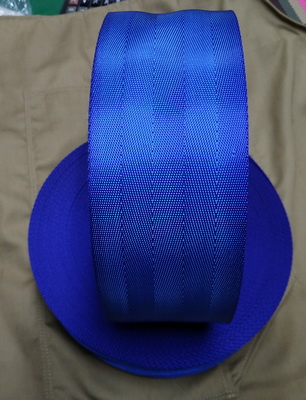 |
 |
Fu Jyi Lin Enterprise Co., Ltd. Copyright © 2014 |
| Address: 10071 No.17-1, SHAU ANN St., Zhongzheng Dist., Taipei City 100, Taiwan (R.O.C.)
TEL:886-2-2301-5900 , 886-2-2307-0952 FAX:886-2-2307-5424 , 886-2-2332-6930 E-Mail:info@fujyilin.com.tw |