


 | ||
|
| ||
News |


|
| Industry Applications of Silicone Anti-slip Elastic: A Buyer's Guide | ||||||||||||||||||||||||||||||||||||||||||||||||
2026-07-08 17:32:22 | ||||||||||||||||||||||||||||||||||||||||||||||||
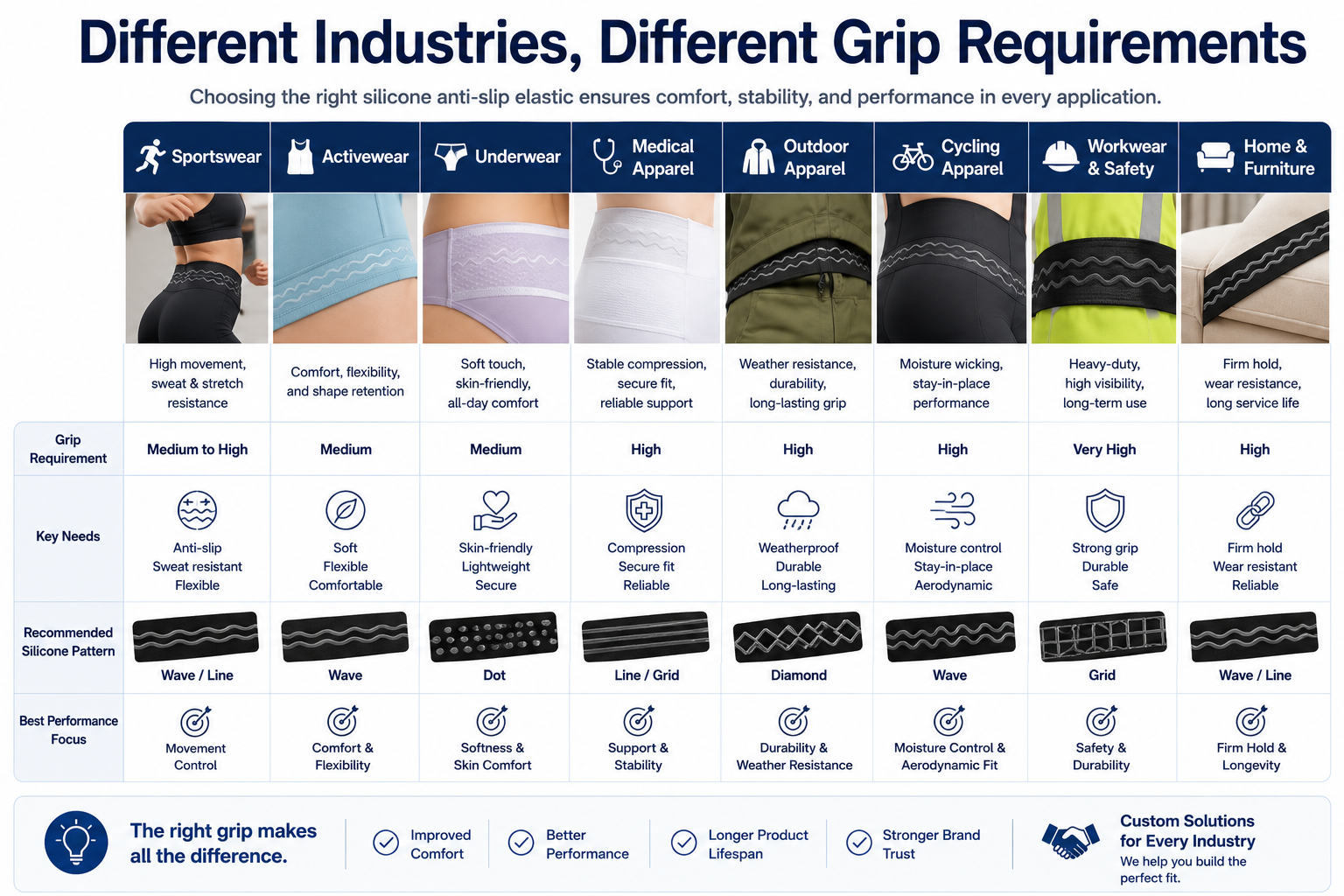
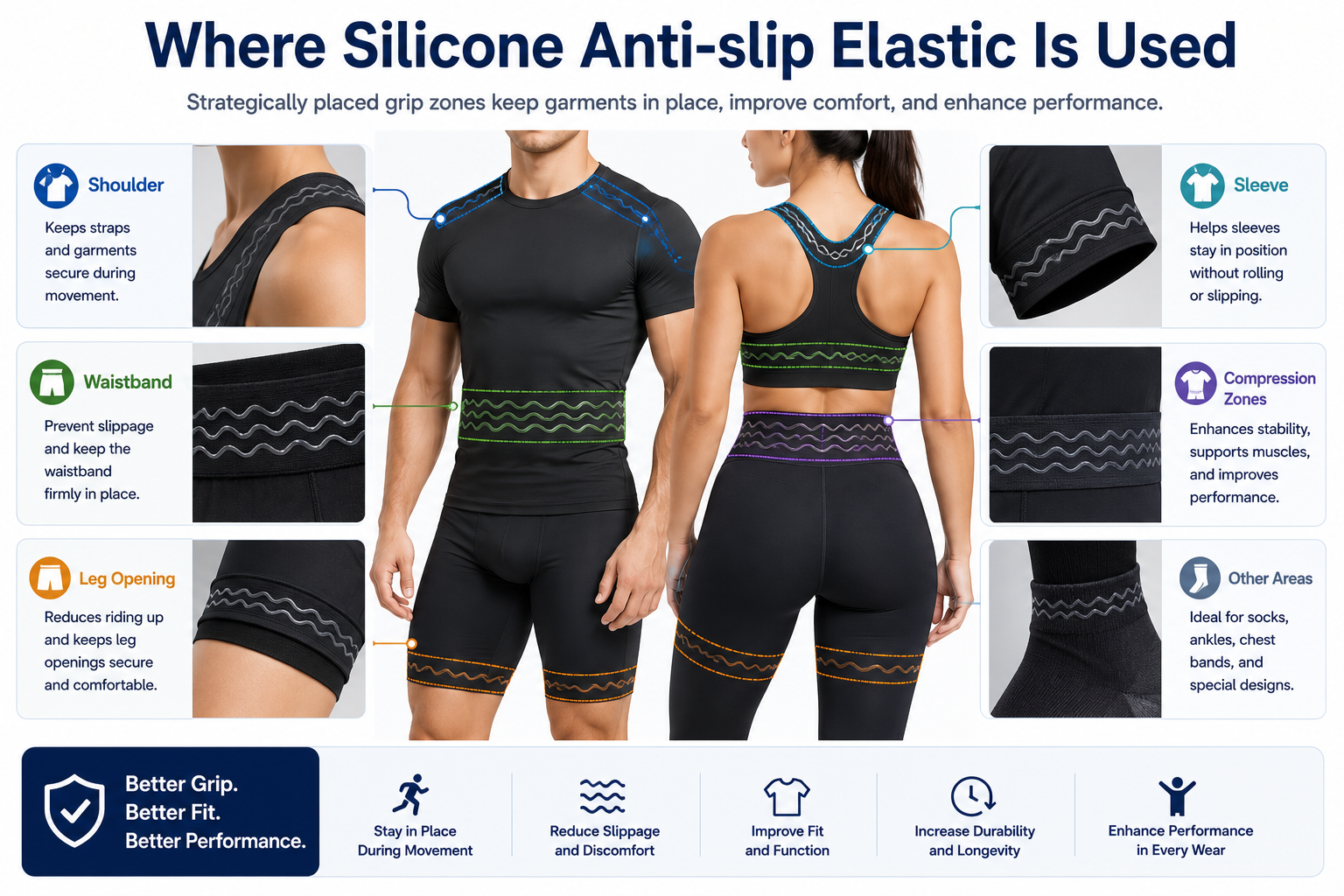
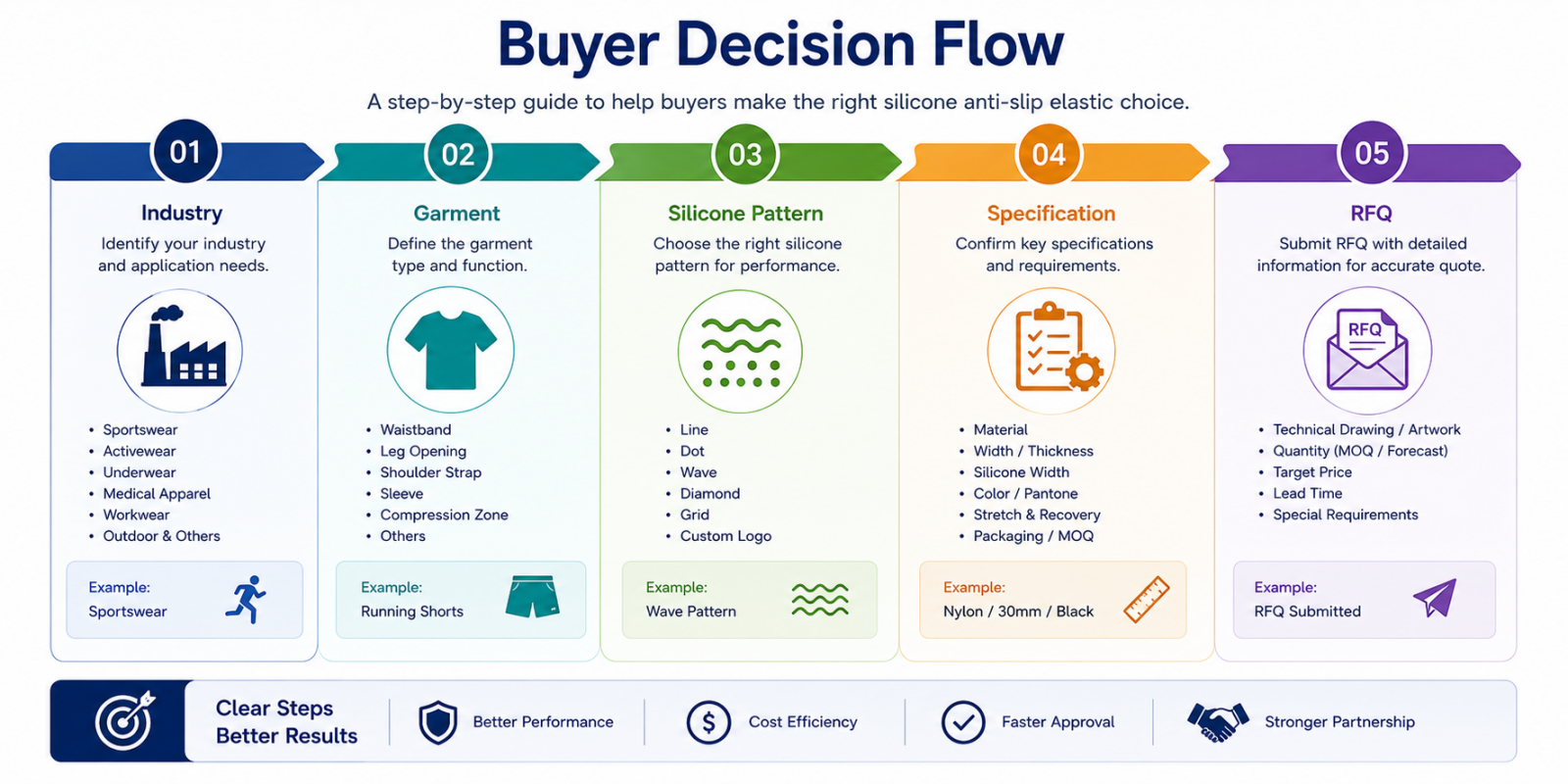
Choosing the right silicone anti-slip elastic is not only about grip performance. Different industries require different levels of stretch, durability, comfort, and washing resistance. A waistband for sportswear, for example, has very different performance requirements from a medical compression garment or outdoor apparel.For apparel buyers, understanding how silicone anti-slip elastic performs in different applications helps simplify supplier selection, reduce product development risks, and improve long-term product quality. This guide explains where silicone grip elastic is commonly used, which specifications are recommended, and what buyers should consider before requesting quotations. How Different Industries Use Silicone Anti-slip ElasticAlthough silicone anti-slip elastic is based on the same manufacturing principle, its performance requirements vary significantly across industries. Buyers should evaluate products according to garment function rather than assuming one specification fits every application.
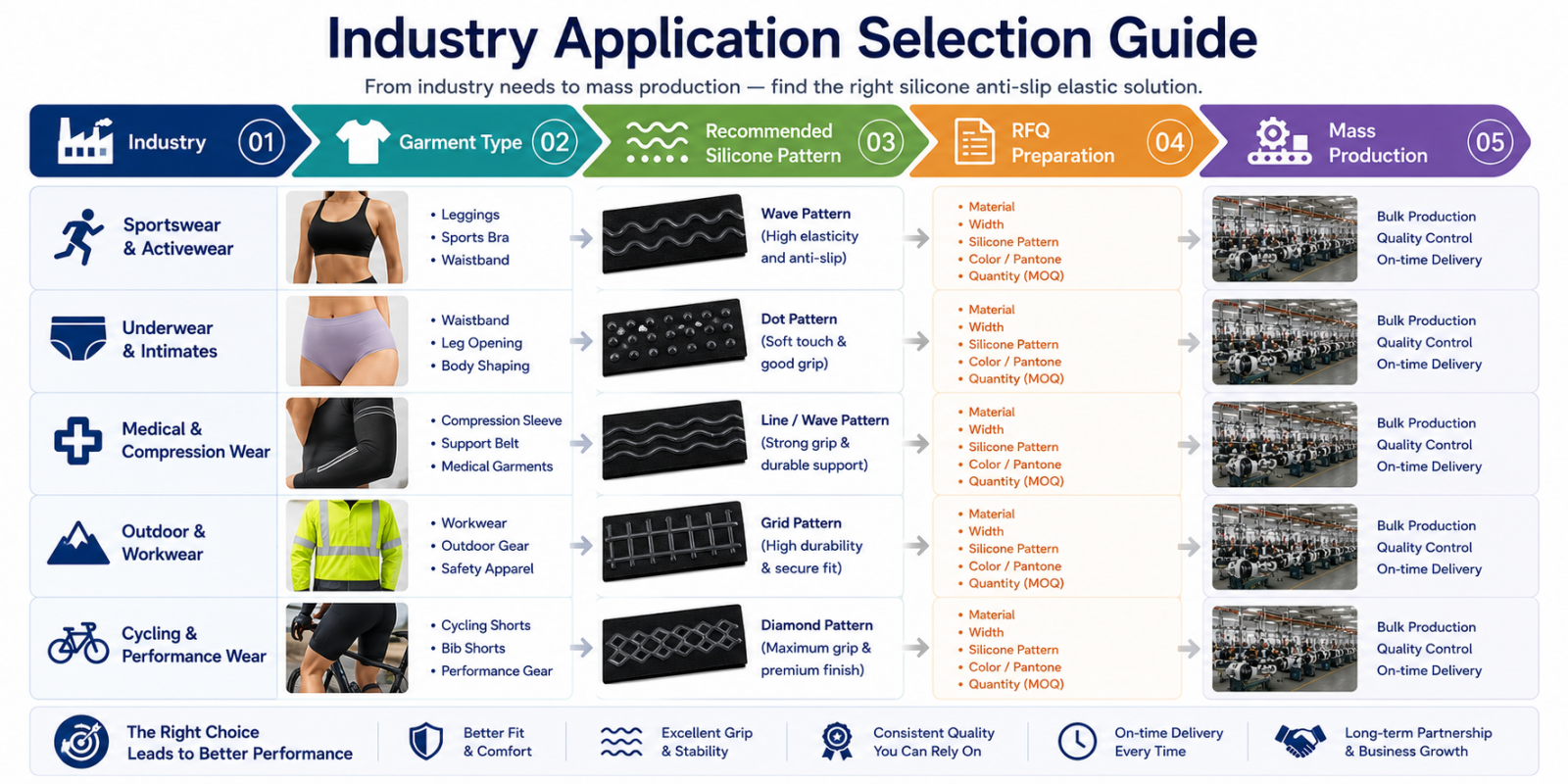
Common Applications Across IndustriesSportswearRunning shorts, leggings, cycling apparel, and training garments require reliable grip to prevent waistband movement during repeated motion. Buyers generally prioritize washing durability, elastic recovery, and consistent silicone adhesion. ActivewearYoga apparel and fitness clothing emphasize flexibility and comfort. Silicone patterns should provide secure positioning without creating excessive pressure during stretching or prolonged wear. Underwear & ShapewearComfort is the primary purchasing consideration. Softer silicone patterns with balanced grip help keep garments in place while maintaining a smooth wearing experience. Medical Compression GarmentsCompression sleeves, braces, and rehabilitation apparel require stable positioning throughout daily use. Buyers often focus on consistent grip performance, skin comfort, and long-term durability after repeated washing. Outdoor Apparel & WorkwearGarments designed for extended wear benefit from improved stability during movement. Durable silicone printing helps reduce garment shifting while supporting user comfort in demanding environments.
Choosing Silicone Grip Elastic by Garment TypeIndustry alone does not determine the correct specification. Buyers should also evaluate the garment itself.
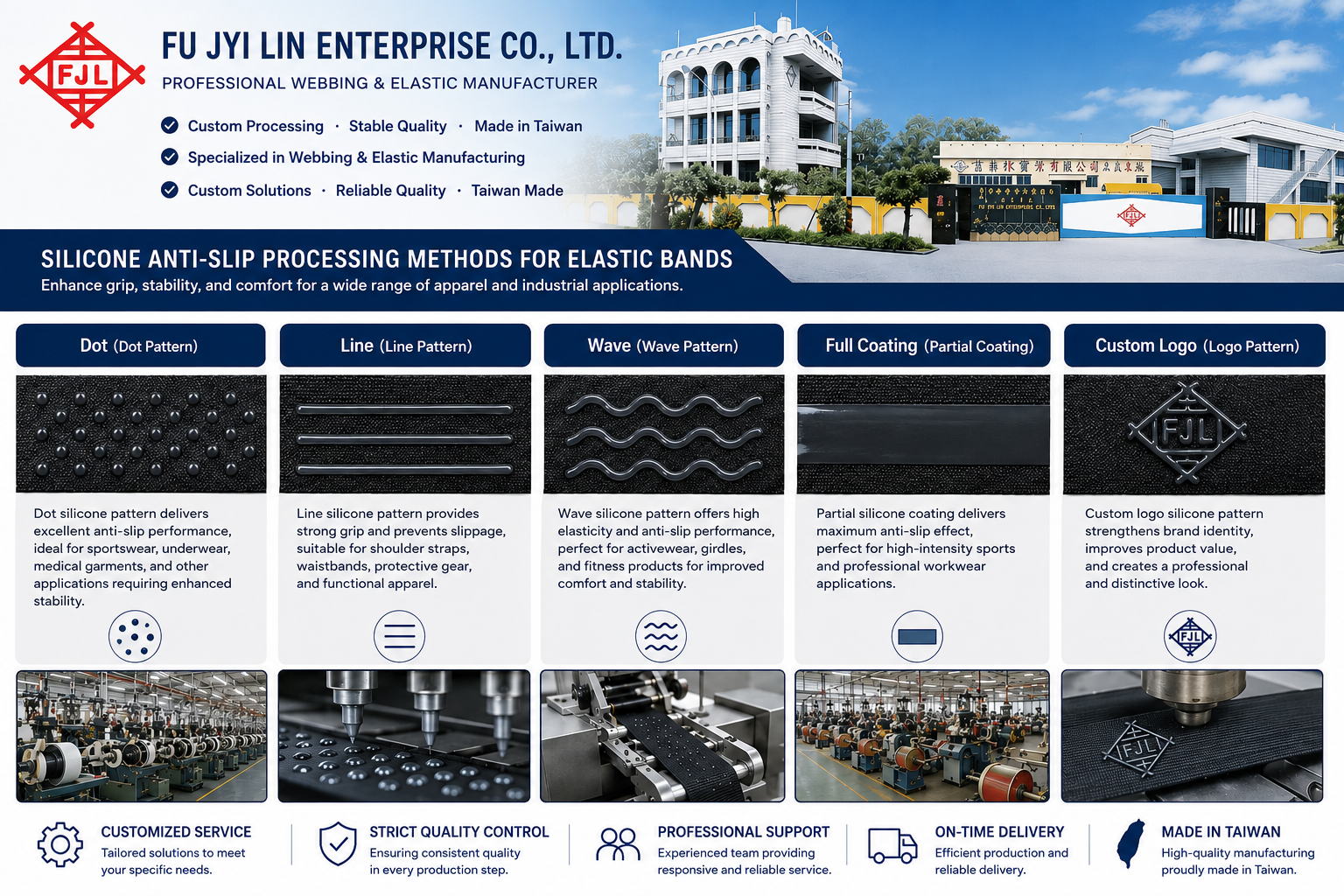
Selecting specifications based on garment function allows buyers to shorten development time and reduce unnecessary sample revisions. Recommended Silicone Patterns by ApplicationDifferent silicone printing patterns provide different levels of grip and flexibility. Selecting the appropriate design improves both product performance and wearer comfort.
Rather than selecting patterns based on appearance alone, buyers should consider garment construction, fabric stretch, washing requirements, and intended use.
|
 |
Fu Jyi Lin Enterprise Co., Ltd. Copyright © 2014 |
| Address: 10071 No.17-1, SHAU ANN St., Zhongzheng Dist., Taipei City 100, Taiwan (R.O.C.)
TEL:886-2-2301-5900 , 886-2-2307-0952 FAX:886-2-2307-5424 , 886-2-2332-6930 E-Mail:info@fujyilin.com.tw |