

 | ||
|
| ||
News |


|
| How to Choose the Right Silicone Anti-slip Elastic Manufacturer for Your Apparel Project | |
2026-07-07 13:57:55 | |
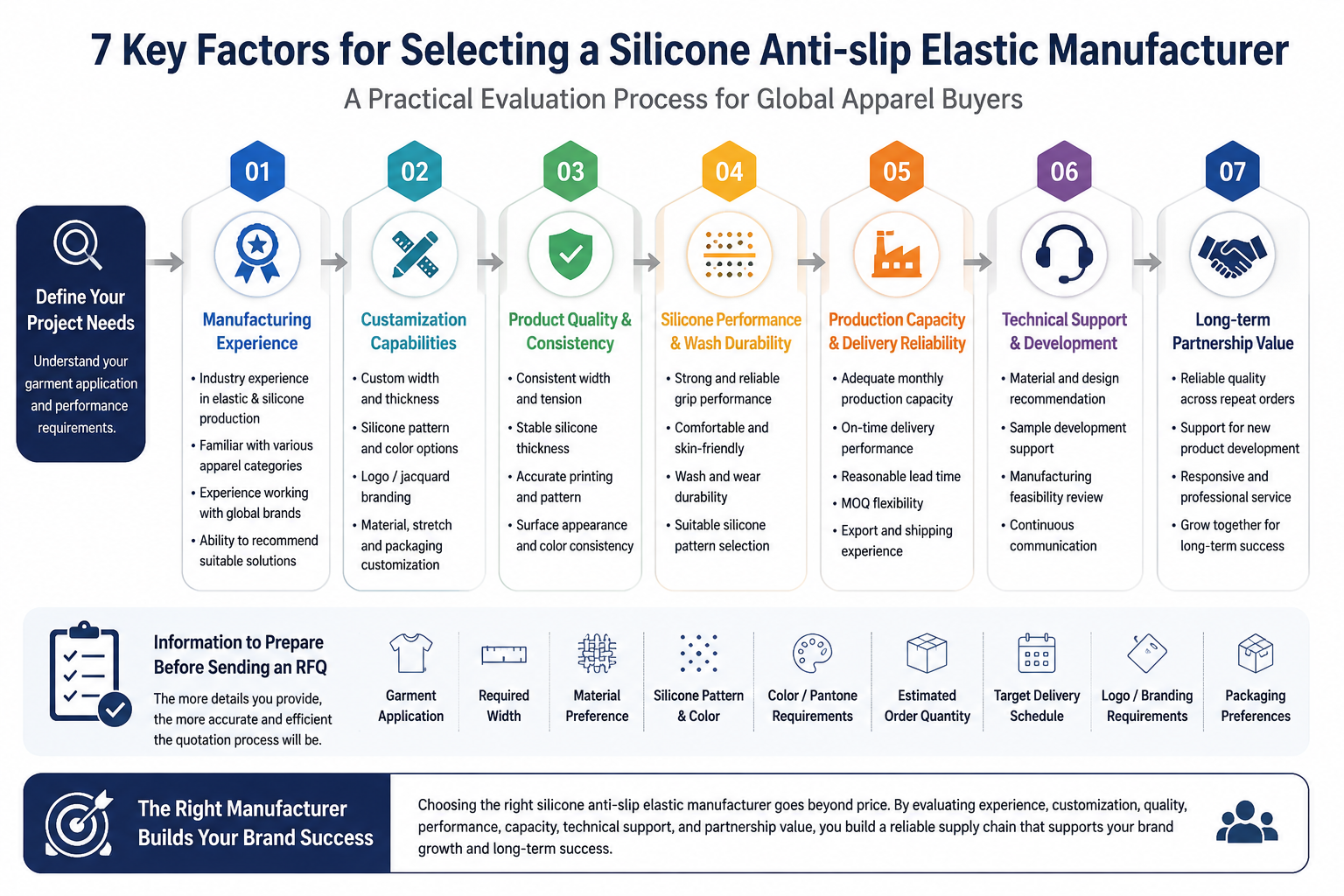
7 Key Factors Global Apparel Buyers Should Evaluate Before Sending an RFQSelecting a silicone anti-slip elastic manufacturer is about much more than comparing prices. While cost remains an important consideration, experienced apparel buyers know that product consistency, manufacturing capability, customization options, and supply reliability have a much greater impact on long-term production success. Whether you are developing sportswear, underwear, shapewear, medical garments, cycling apparel, or outdoor clothing, the quality of the silicone anti-slip elastic directly affects garment performance, customer satisfaction, and brand reputation. An experienced manufacturing partner can help reduce production risks, improve product consistency, and support future product development.
If you have already learned what silicone anti-slip elastic is, how it improves garment performance, and how it compares with woven grip elastic, the next step is selecting the right manufacturing partner. Before requesting quotations, consider these seven key evaluation factors. 1. Manufacturing Experience in Apparel Elastic ProductionNot every elastic manufacturer produces silicone anti-slip elastic, and not every silicone printing company understands elastic webbing. An experienced supplier should understand both elastic weaving and silicone application, ensuring that the finished product maintains the required stretch, recovery, grip performance, and durability. Manufacturers with experience serving international apparel brands are generally better equipped to recommend suitable materials, silicone patterns, and production methods for different garment categories. Ask suppliers about their experience with:
Industry experience often translates into faster product development and fewer production issues. 2. Customization CapabilitiesEvery apparel brand has different functional and branding requirements. A reliable manufacturer should provide flexible customization rather than offering only standard products. Common customization options include:
The ability to develop customized products allows buyers to create garments with better performance while strengthening brand identity. 3. Product Quality and Manufacturing ConsistencySilicone anti-slip elastic performs consistently only when both the woven elastic and silicone application are manufactured under controlled production conditions. Buyers should evaluate whether the supplier can maintain consistent:
Even small variations may affect garment fit, sewing efficiency, and customer satisfaction. Stable production quality is often more valuable than choosing the lowest quotation. 4. Silicone Performance and Wash DurabilityThe silicone itself is one of the most important performance factors. High-quality silicone should provide reliable grip without becoming sticky, brittle, or uncomfortable during daily wear. It should also maintain performance after repeated washing and normal garment use. Ask suppliers how they optimize silicone application for different garment requirements, such as:
Selecting the appropriate silicone pattern is just as important as selecting the elastic itself. 5. Production Capacity and Delivery ReliabilityReliable delivery schedules are essential for apparel production. Before placing production orders, buyers should understand:
Manufacturers with stable production planning can reduce supply chain disruptions and support long-term sourcing partnerships. Consistent delivery performance becomes increasingly important as production volumes grow. 6. Technical Support Throughout Product DevelopmentA good supplier contributes more than manufacturing. Experienced manufacturers often assist buyers during product development by recommending suitable specifications, identifying potential production issues, and suggesting cost-effective alternatives without compromising performance. Technical support may include:
Early technical collaboration can shorten development cycles and improve the final product. 7. Long-Term Partnership ValueMany apparel brands initially compare suppliers based on unit price. However, long-term sourcing decisions are usually influenced by reliability, communication, responsiveness, and continuous improvement. A dependable manufacturing partner should be able to support:
Strong supplier relationships often reduce sourcing risks while improving purchasing efficiency over time. A Practical Checklist Before Requesting a QuotationBefore contacting a silicone anti-slip elastic manufacturer, prepare the following information to receive a more accurate quotation:
Providing complete project information helps suppliers recommend the most suitable production solution while reducing quotation time. Why Global Apparel Brands Prioritize Manufacturing CapabilityAs garment performance expectations continue to rise, apparel brands increasingly evaluate suppliers based on manufacturing capability rather than price alone. Silicone anti-slip elastic has become an important functional component in sportswear, underwear, medical apparel, shapewear, outdoor clothing, and workwear. Choosing the right manufacturer helps ensure consistent product quality, efficient production, dependable delivery, and successful long-term cooperation. For buyers seeking a reliable sourcing partner, evaluating manufacturing expertise, customization capability, quality consistency, technical support, and supply stability provides a stronger foundation than comparing quotations alone. In the next article, we will explore how custom silicone anti-slip elastic can be tailored through silicone pattern design, logo integration, color matching, and OEM manufacturing options to help apparel brands create differentiated products and strengthen market competitiveness. |
 |
Fu Jyi Lin Enterprise Co., Ltd. Copyright © 2014 |
| Address: 10071 No.17-1, SHAU ANN St., Zhongzheng Dist., Taipei City 100, Taiwan (R.O.C.)
TEL:886-2-2301-5900 , 886-2-2307-0952 FAX:886-2-2307-5424 , 886-2-2332-6930 E-Mail:info@fujyilin.com.tw |